B2B SaaS (workforce scheduling)
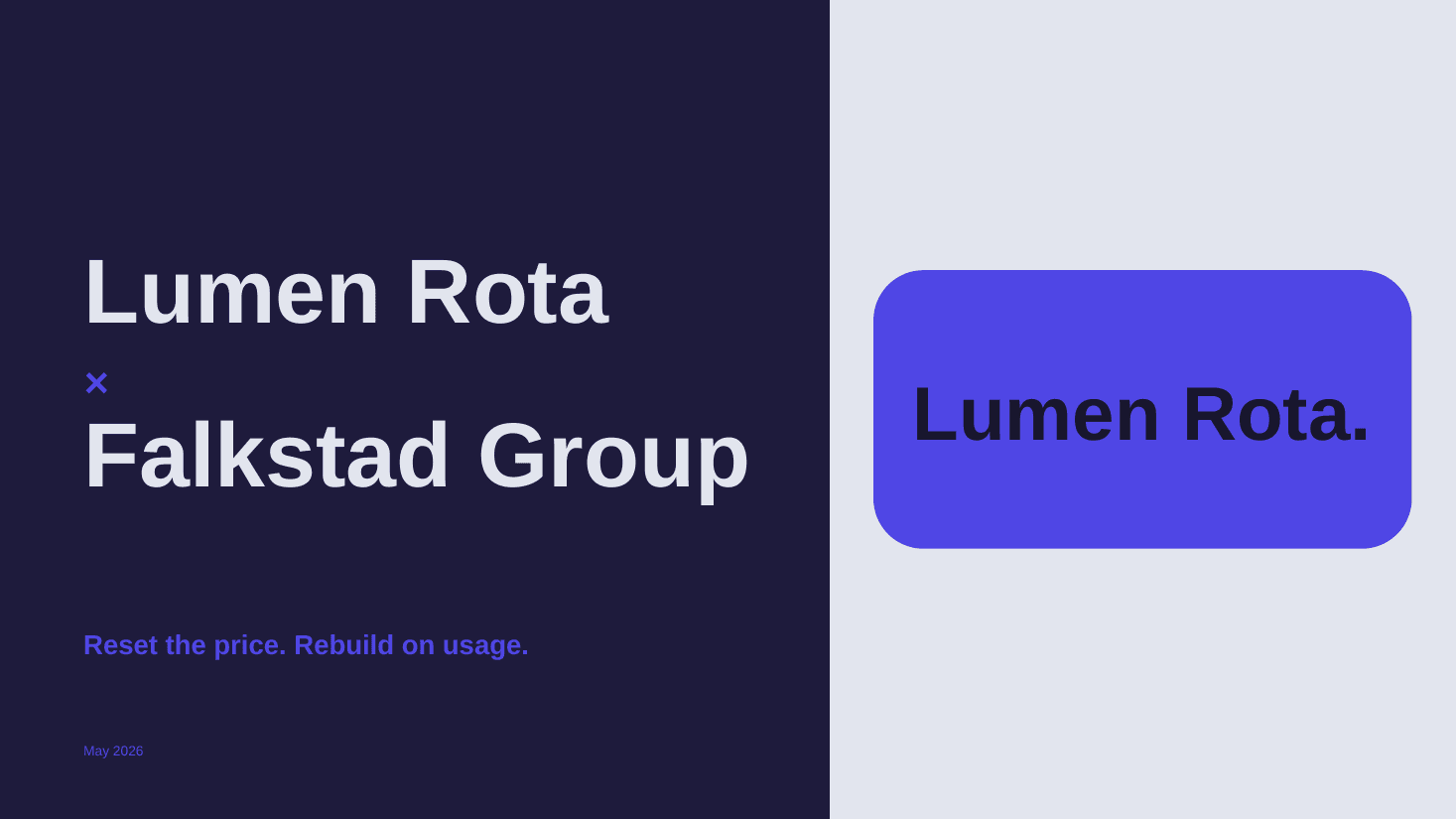
Lumen Rota × Falkstad Group — Contract Renewal
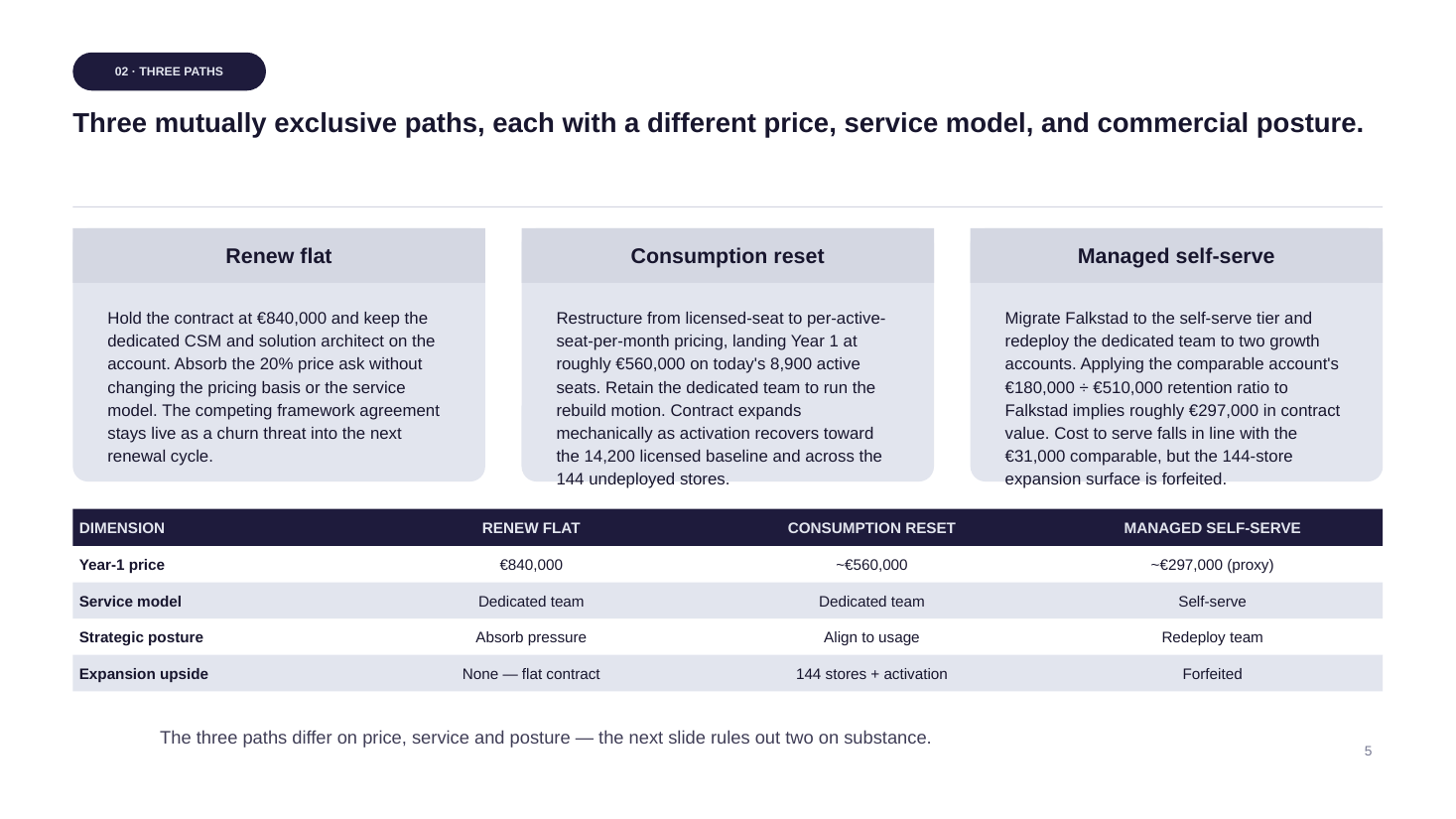
A Berlin software company's third-largest account is shrinking into a renewal, with a 20% discount ask on the table and three mutually exclusive paths open.
Fictional sample. Every company, person and number in these samples is fictional. No real client information appears in any file.
What went in
This is the kind of prompt a candidate pastes into the form — the situation and what the interviewer asked for. Nothing else was supplied.
The situation
A Berlin software company's third-largest account is shrinking into a renewal, with a 20% discount ask on the table and three mutually exclusive paths open.
What the interviewer asked for
Read where the account stands, pick one of three exclusive paths with reasoning that rules the other two out, set out a gated recovery sequence, and compare three years against renewing flat.
Interviewing for a Customer Success Manager role. Figures in EUR.
The files, exactly as they came out
Open them and check the work — the model’s cells are live formulas, not pasted values.
- The deck — 11 slidesEditable PowerPoint, the same file a buyer downloads.deck.pptx
- The Excel modelThe sizing behind the figures, with its assumptions listed and sourced.model.xlsx
- The prep briefThe Word document you take into the room, with answers drafted for the hard questions.prep_brief.docx
- The deck as a PDFFor reading it through without opening PowerPoint.deck.pdf
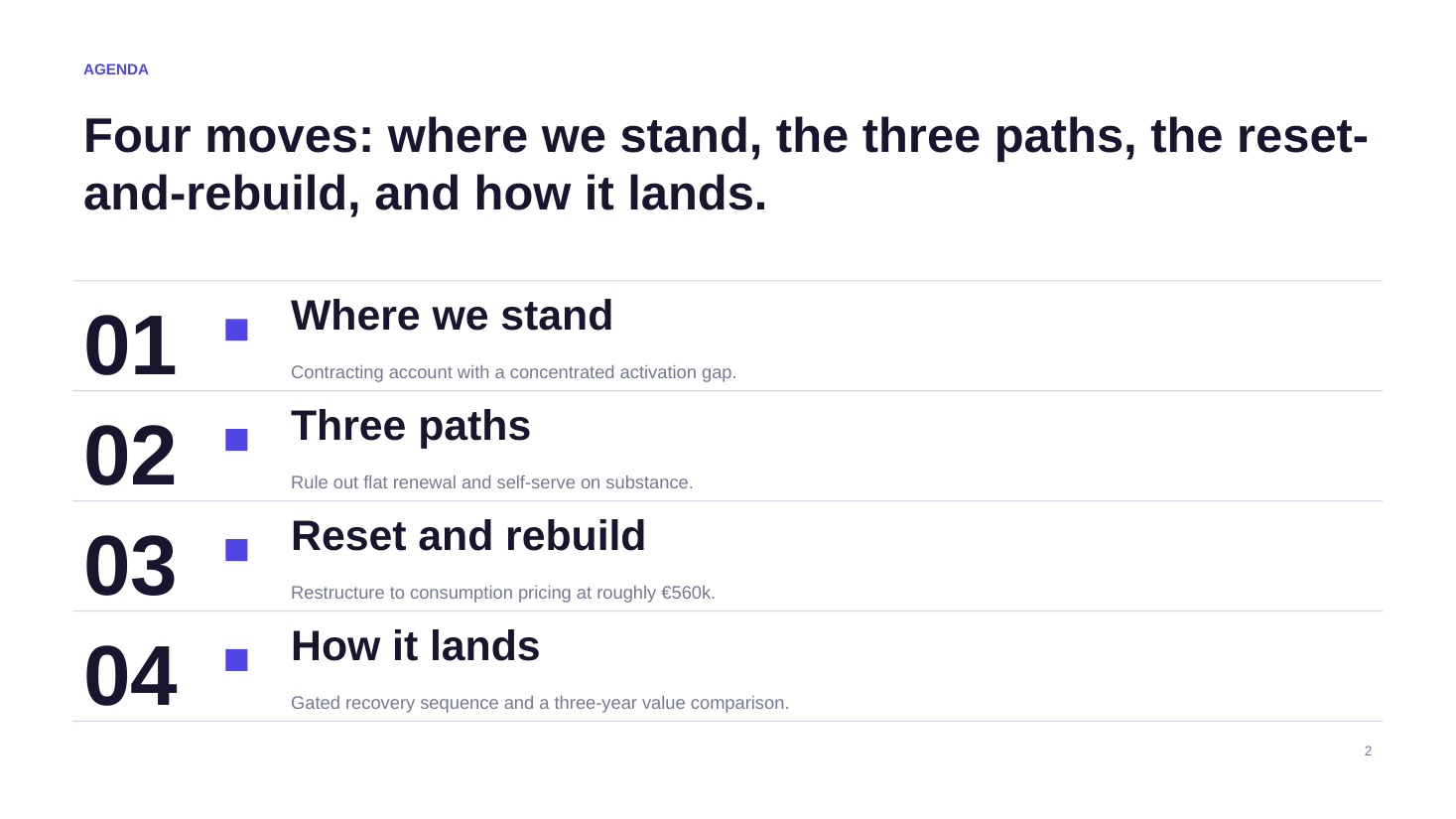
The deck, slide by slide
All 11 slides, in order, from the generated file. Open any slide for the full-size image.
Slide 1 of 11 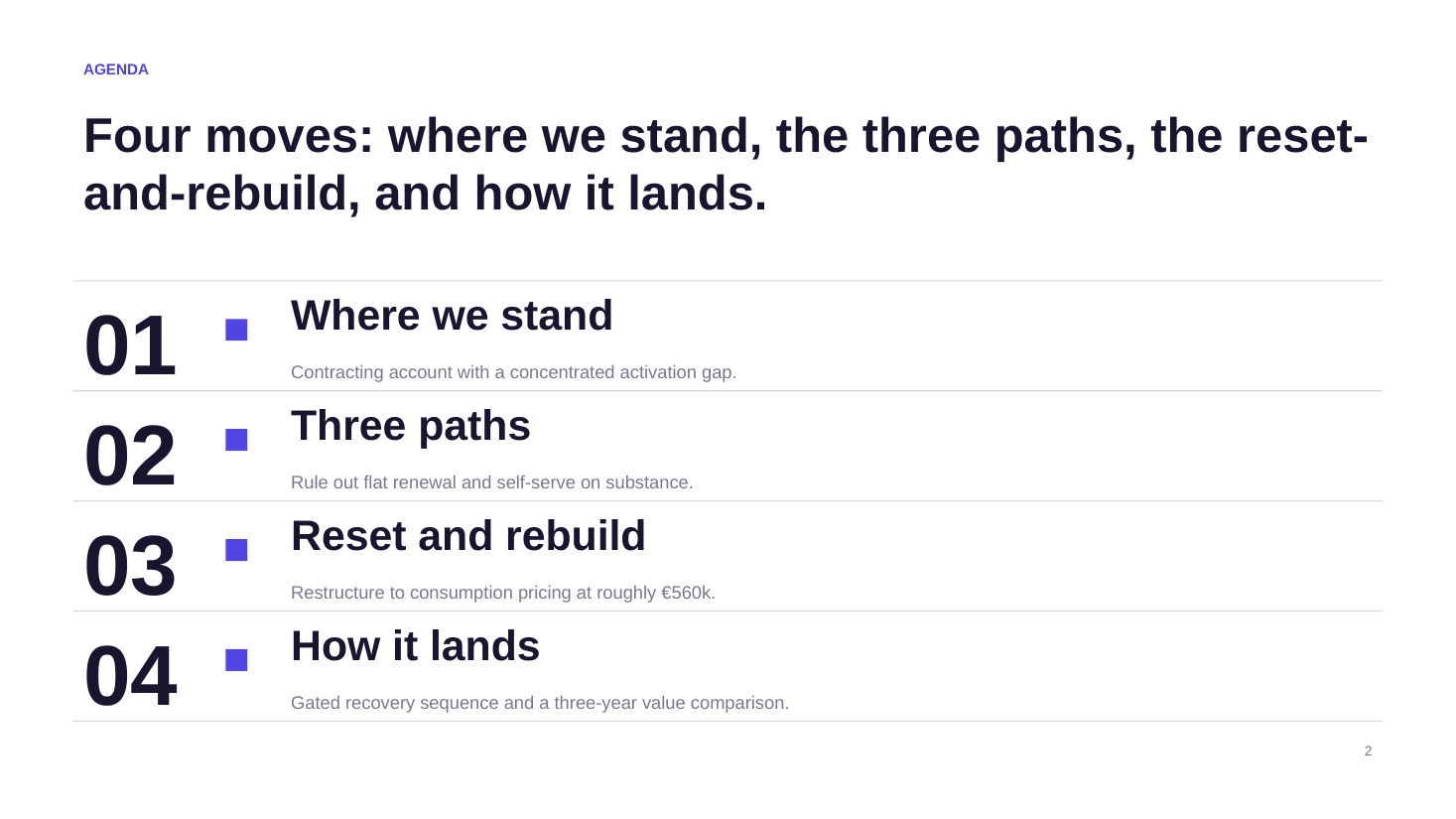
Slide 2 of 11 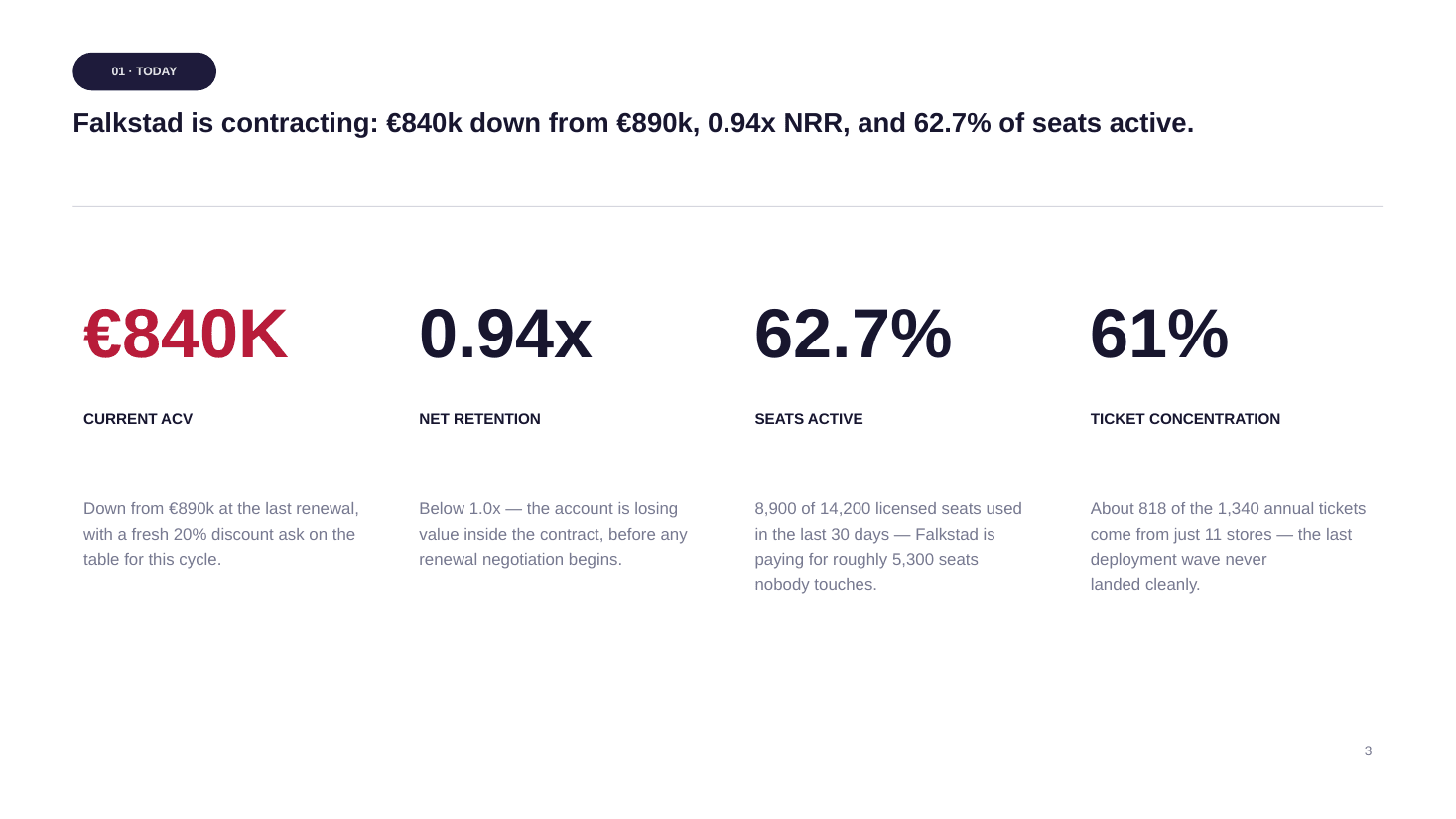
Slide 3 of 11 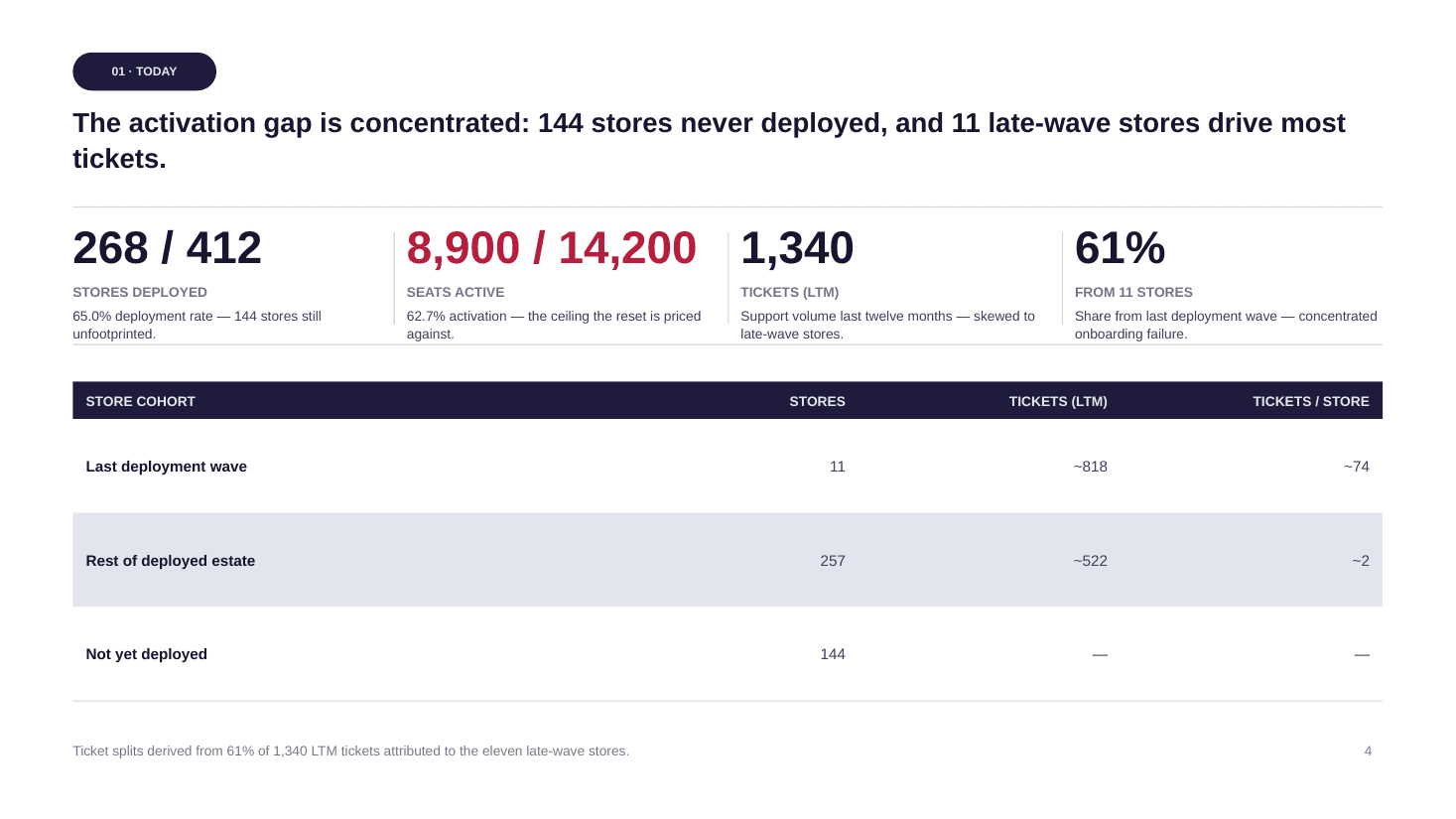
Slide 4 of 11 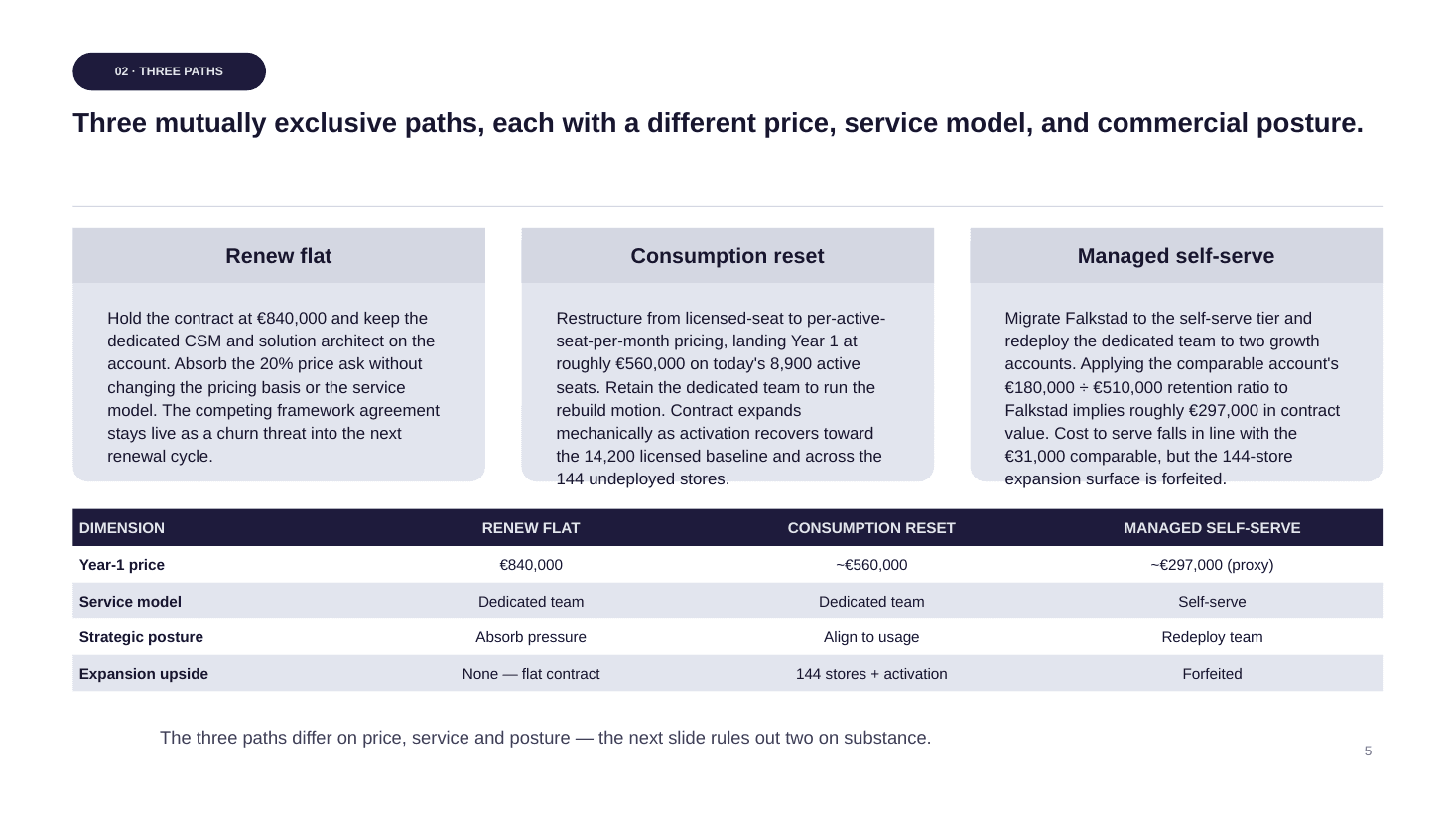
Slide 5 of 11 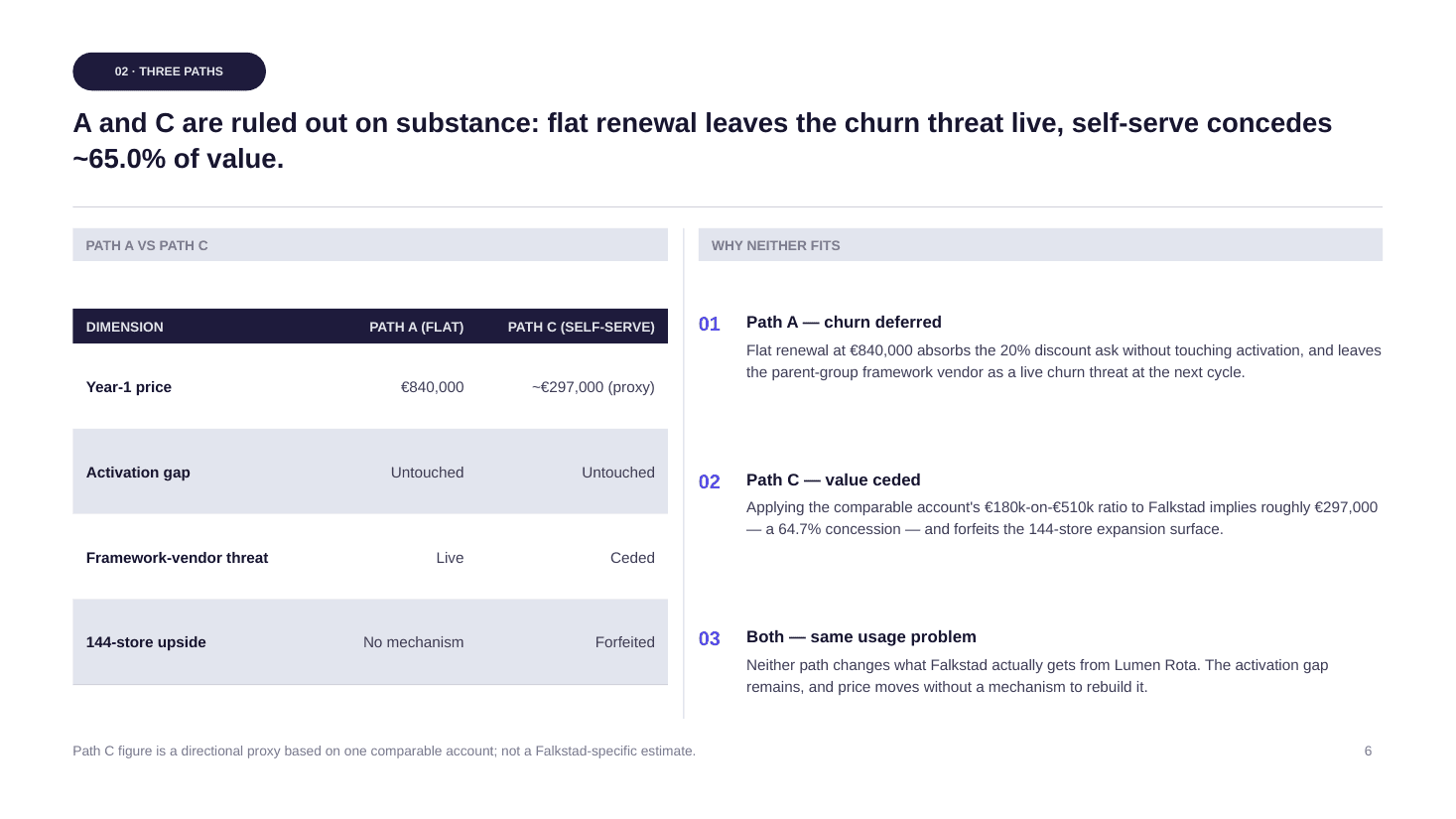
Slide 6 of 11 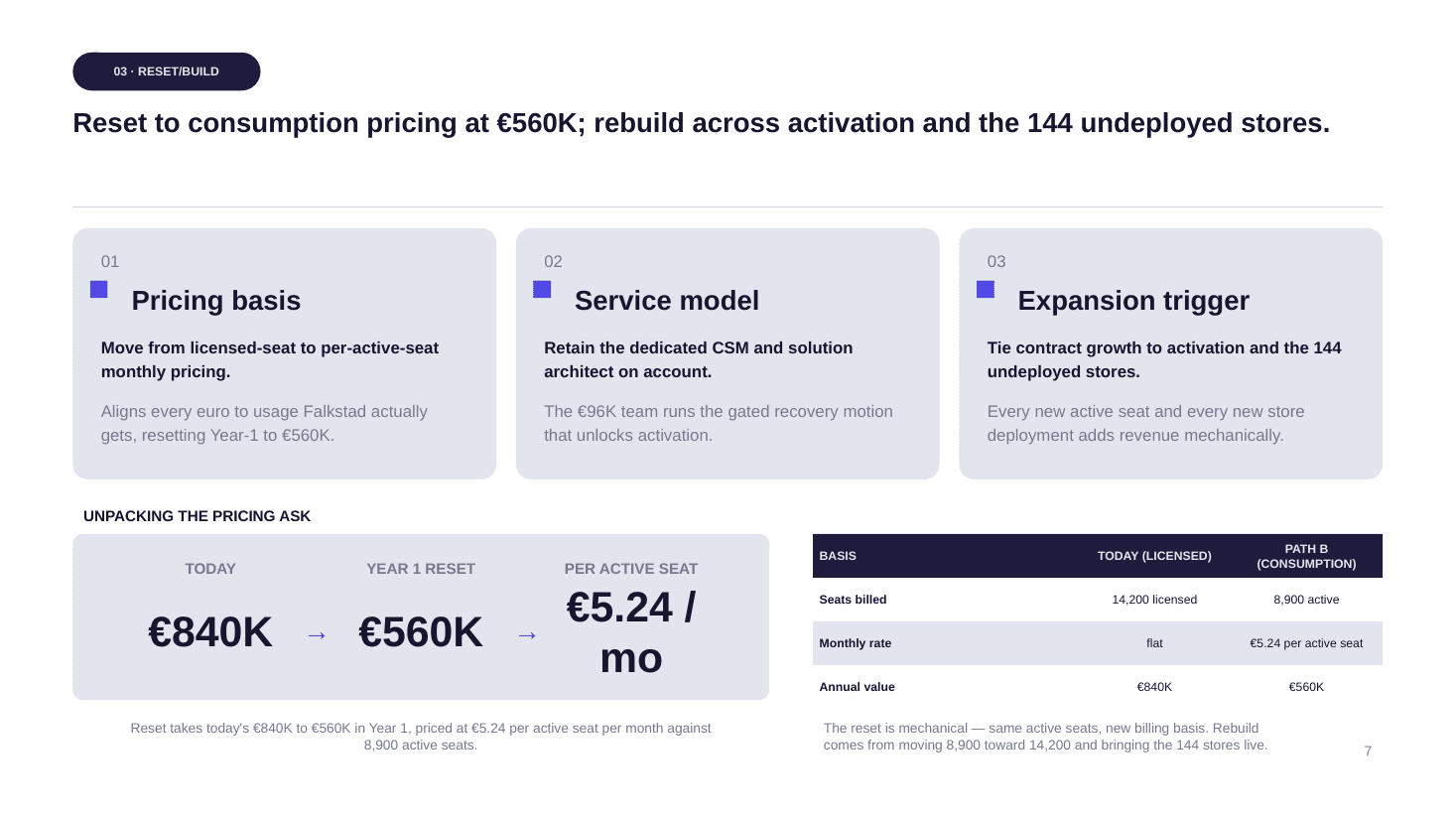
Slide 7 of 11 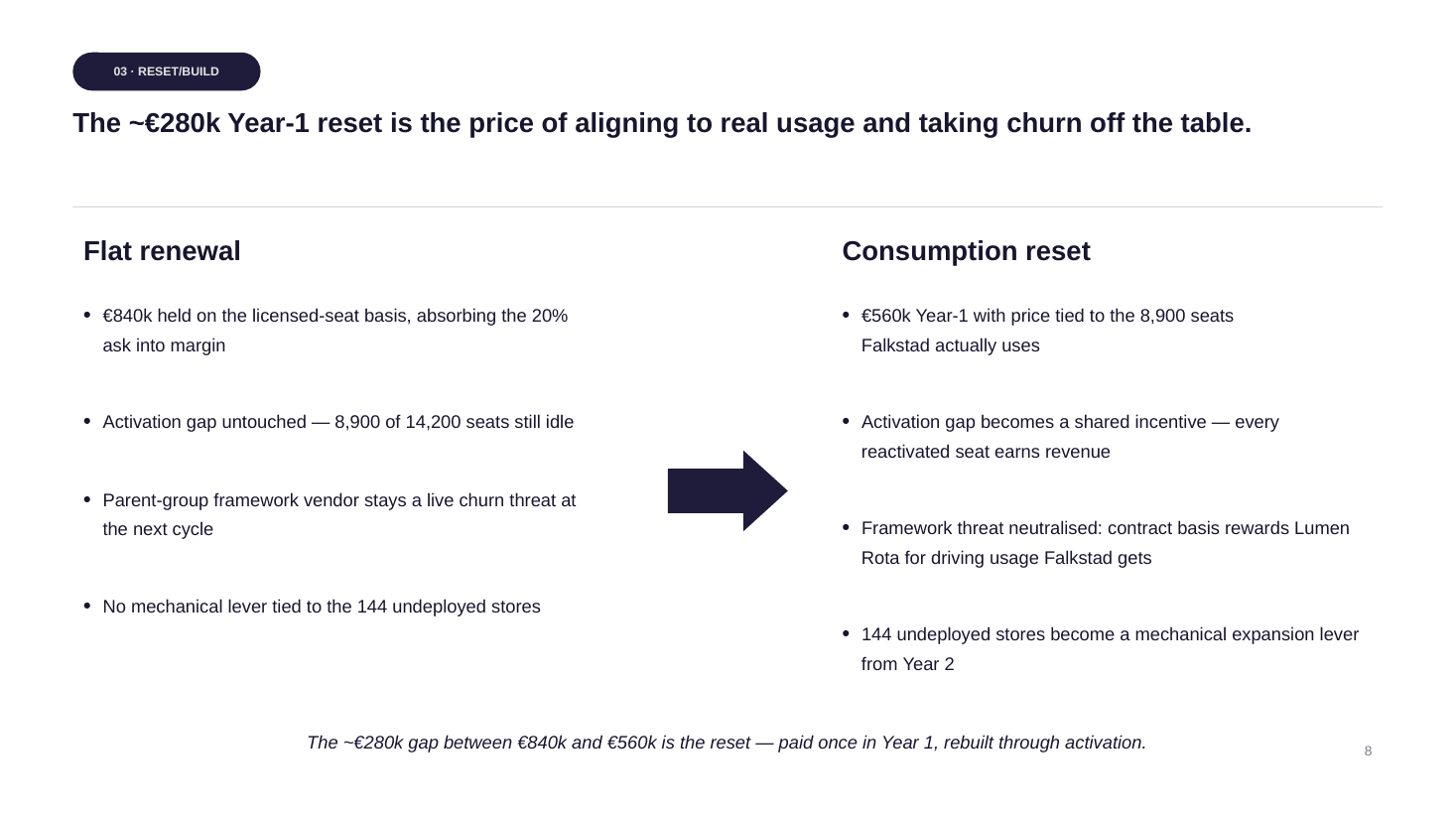
Slide 8 of 11 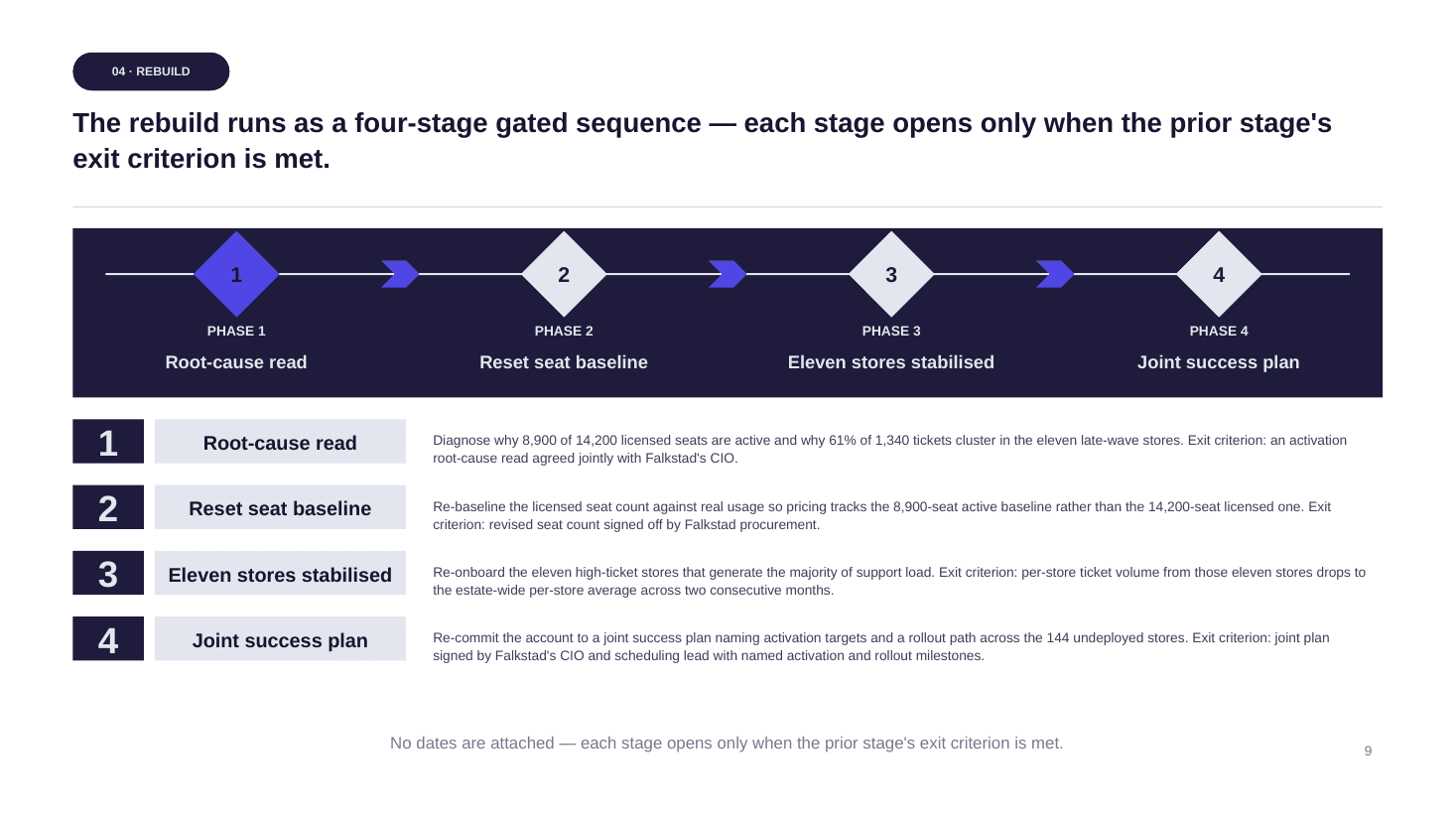
Slide 9 of 11 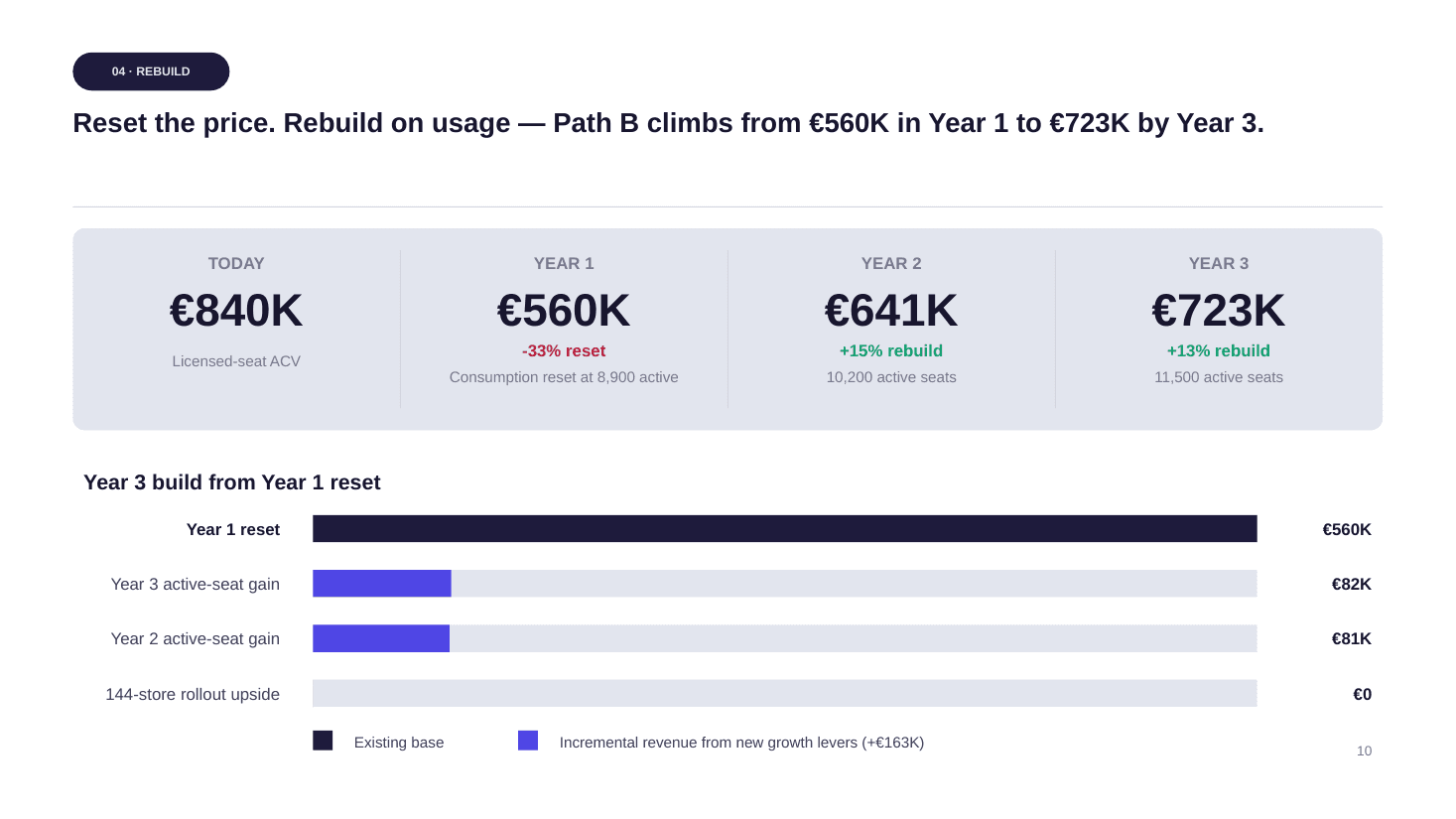
Slide 10 of 11 
Slide 11 of 11
The full write-up
Everything here is fictional. Lumen Rota and Falkstad Group are invented companies and
every number in these files was made up for this example. Nothing in it comes from a real
client.
The case
Lumen Rota is a Berlin workforce-scheduling software company selling to European grocery and
hospitality chains. Falkstad Group, a Nordic grocery chain, is its third-largest account and
the contract is up for renewal — with a 20% discount ask on the table and a competing vendor
already holding a framework agreement with Falkstad's parent group. The candidate is
interviewing for a Customer Success Manager role.
What the interviewer asked for
No more than ten slides: a read of where the account actually stands; a recommendation among
three mutually exclusive paths, with reasoning that rules the other two out rather than
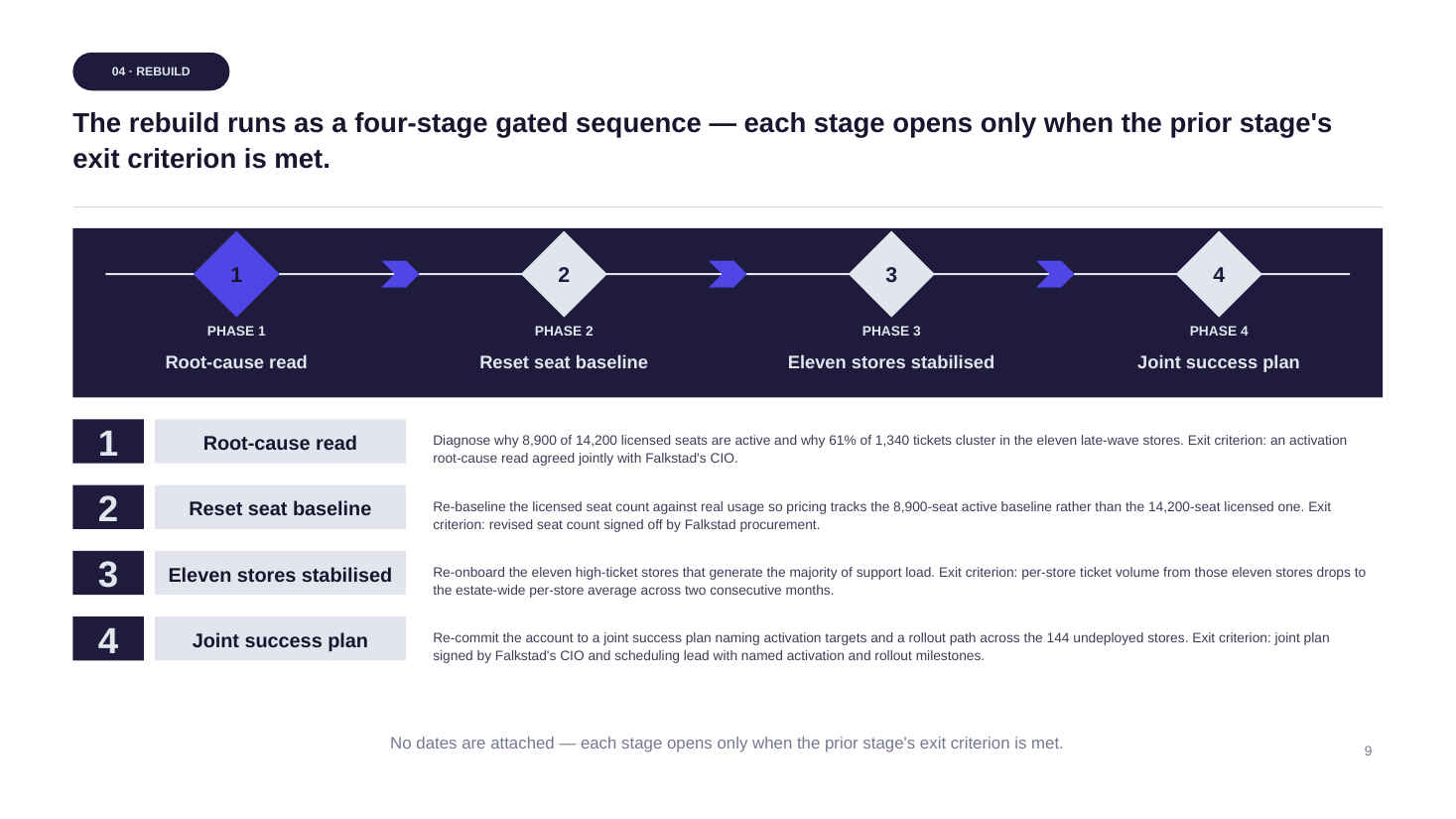
merely ranking them; a recovery sequence for the underlying problem, with what has to be
true to move from each stage to the next; and a three-year value comparison of the
recommended path against renewing flat.
What the deck argues
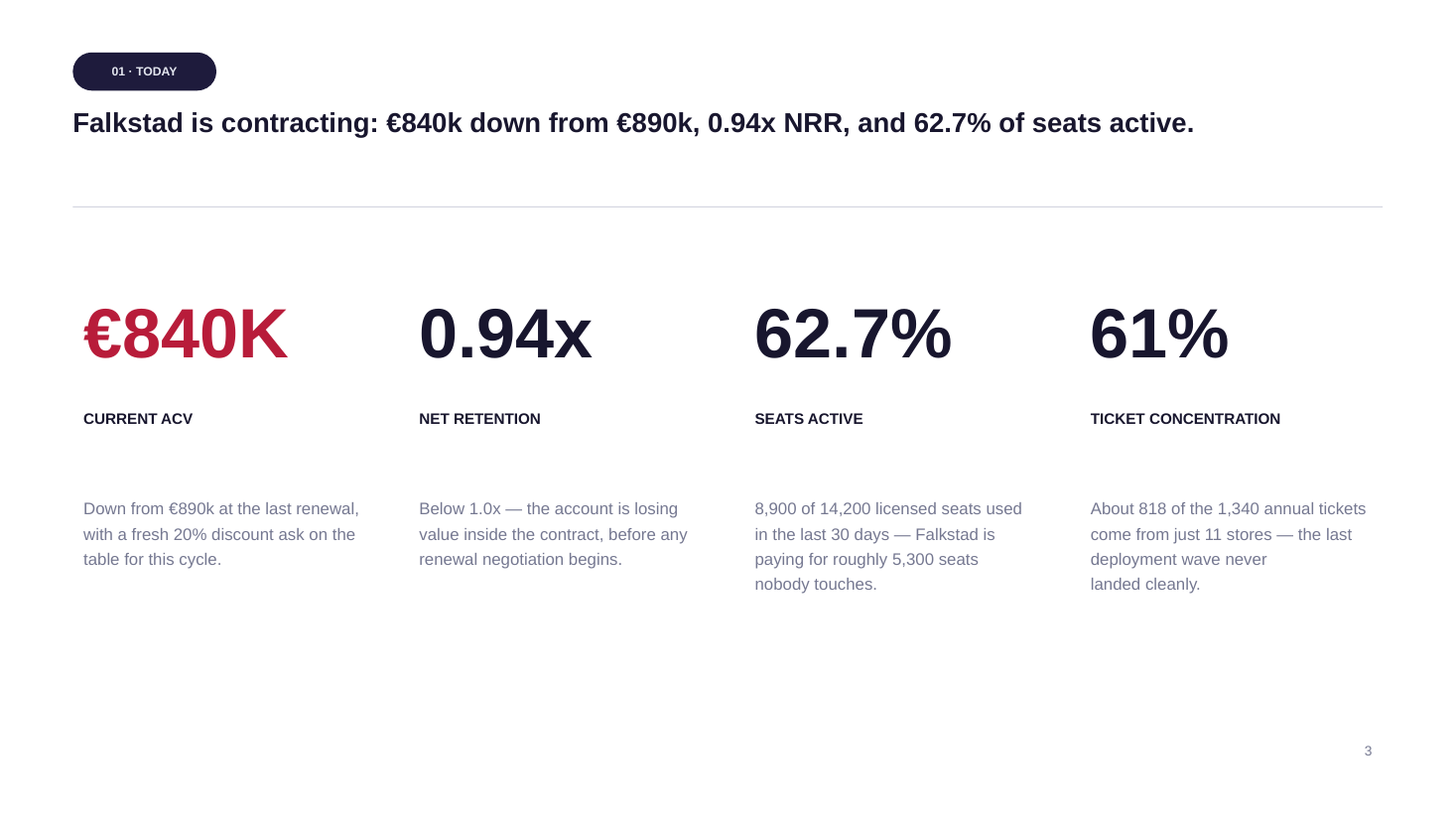
The account is contracting — €840,000 down from €890,000, net revenue retention below 1.0x,
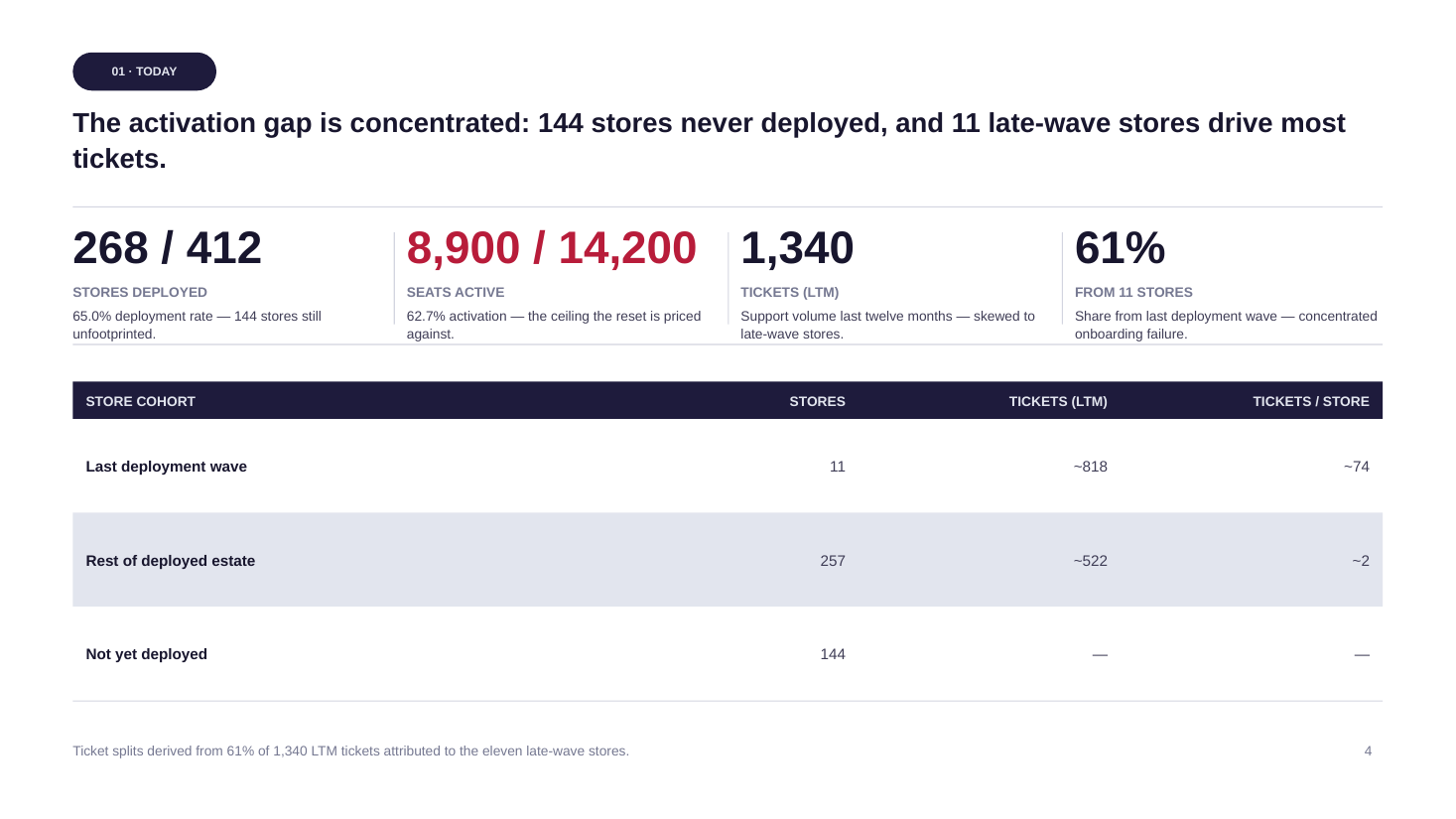
and only 8,900 of 14,200 licensed seats actually in use. The activation gap is concentrated:
144 stores were never deployed, and eleven stores from the last deployment wave generate 61%
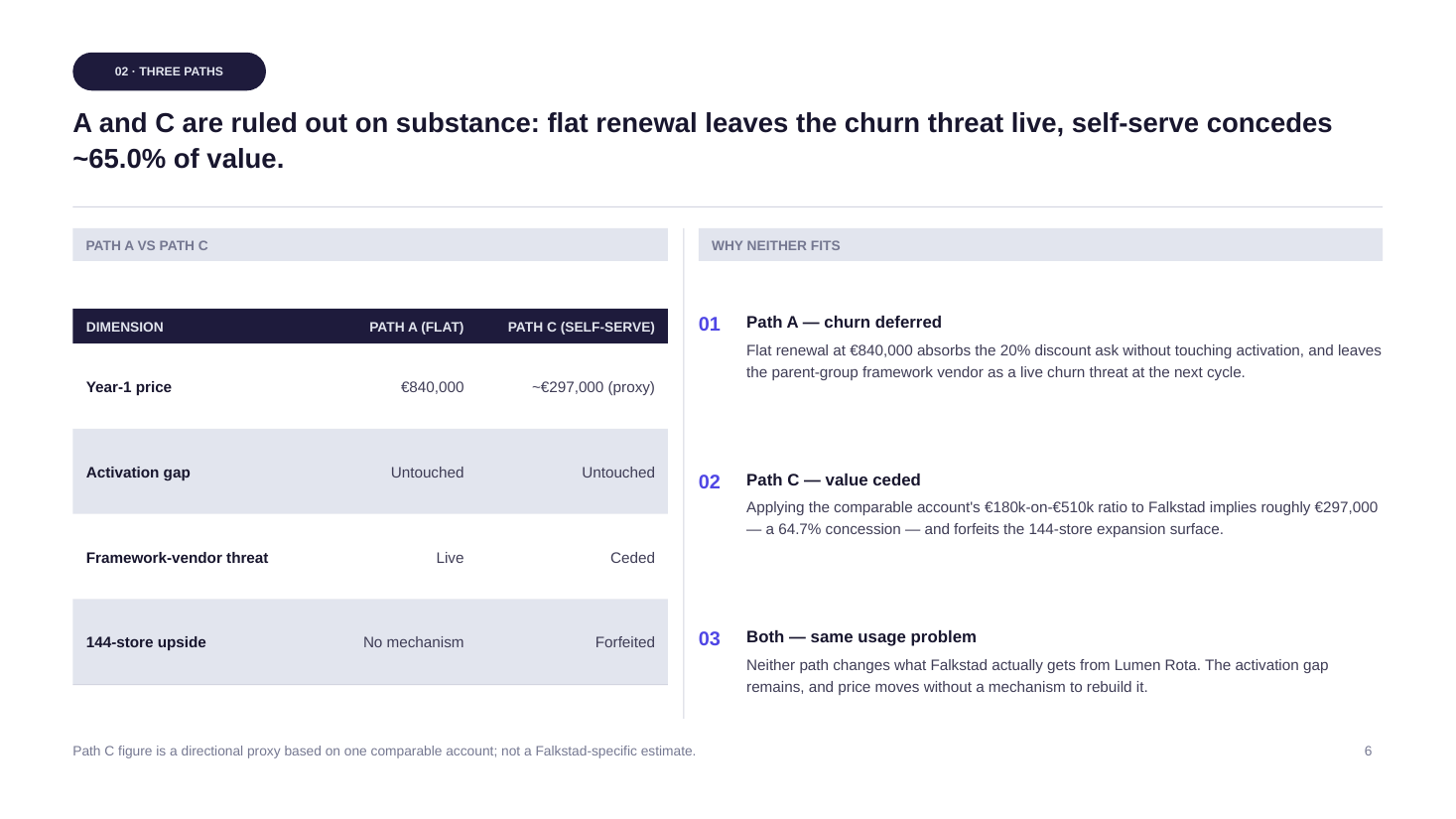
of all support tickets. Renewing flat leaves the churn threat live and does nothing about
activation; moving to self-serve concedes roughly two-thirds of the contract value and
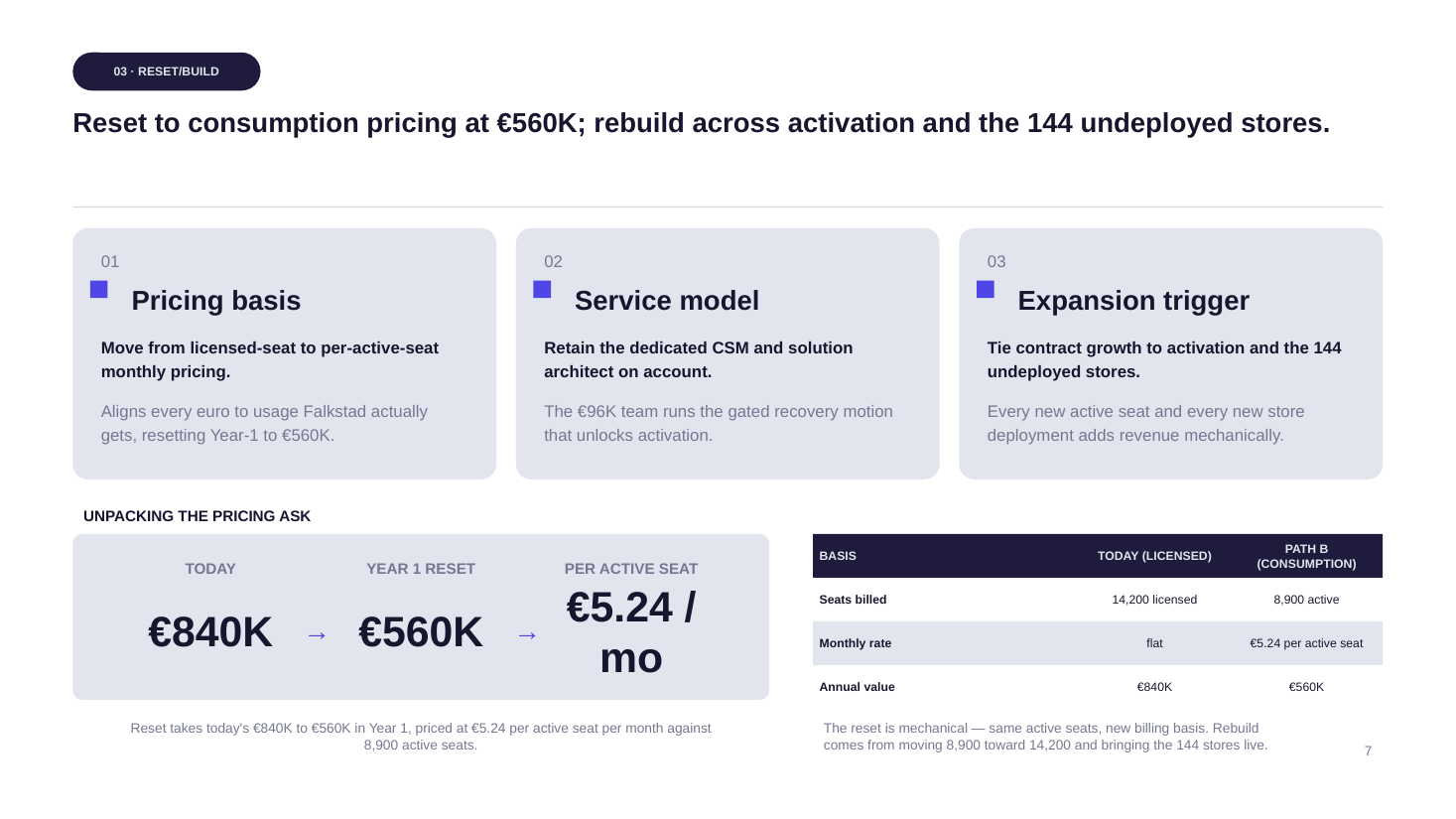
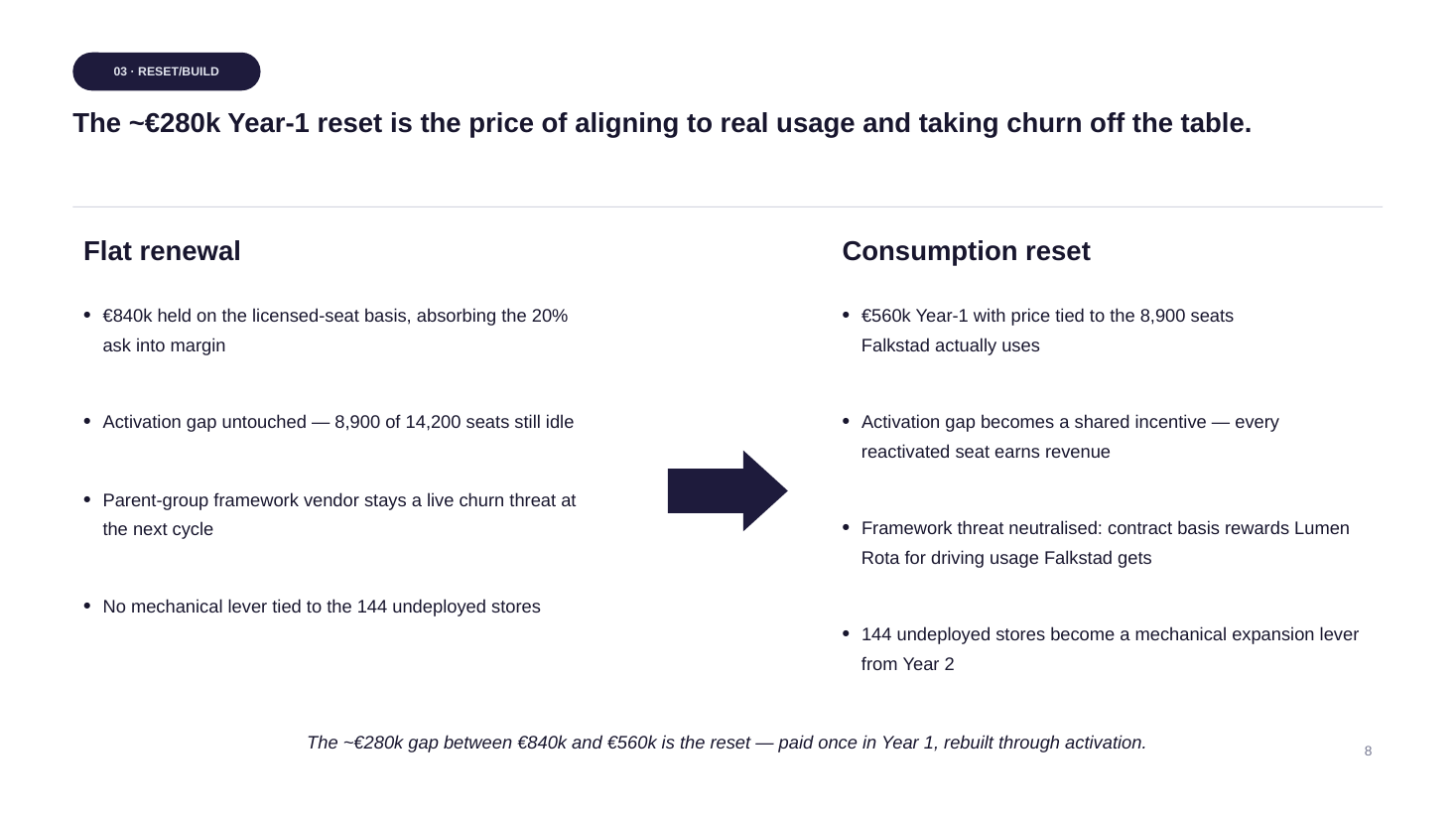
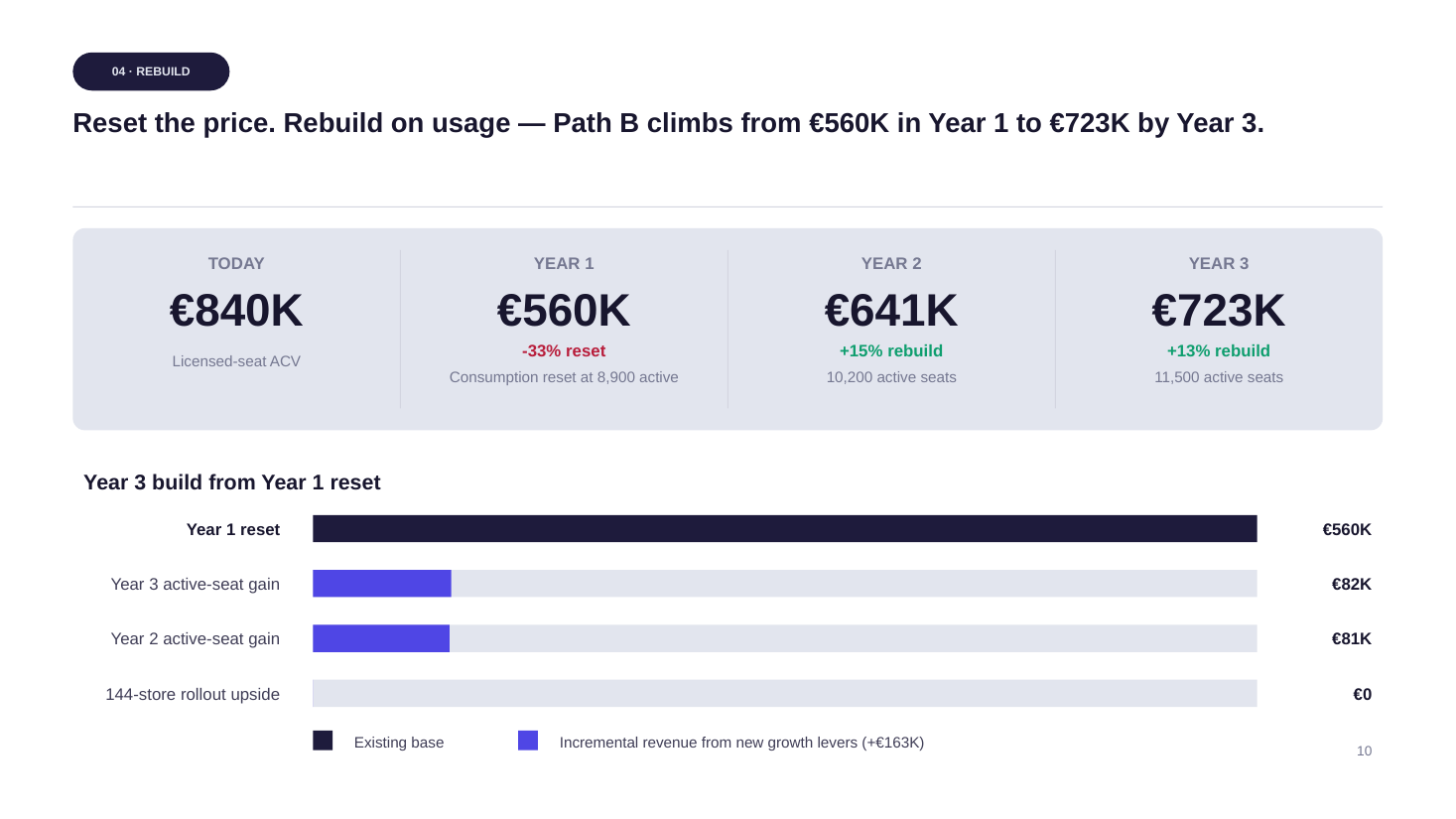
forfeits the expansion surface. The recommendation is the third path: reset to per-active-seat
pricing, which prices the contract against what Falkstad actually uses, and rebuild from
there as activation recovers and the remaining stores come live. The recovery motion is set
out as a gated sequence with exit criteria rather than dates, because the customer refused
to commit to a calendar until the diagnosis is agreed.
What comes with it
The Excel model runs the three-year comparison. Three tabs: a summary putting the
recommended path beside flat renewal across today, Year 1, Year 2 and Year 3; a data tab
modelling the activation scenario behind those numbers; and an assumptions tab naming every
input and its source, including which figures were extrapolated rather than given.
The prep brief is the Word document for the renewal conversation: the theory of the deal,
the headline numbers, what you are asking the panel to endorse and what you are conceding,
and prepared answers to the hard questions — including why a smaller Year 1 number is the
right recommendation.
Your case will not look like this one — it is built from the prompt you paste in. You see a preview before you pay anything.