
Third-party logistics / fulfilment
Halden Fulfilment — Six-Site Network Assessment
A six-site fulfilment operator has lost margin for five straight quarters while volume grew, and the COO wants to know where the network is actually weak.
Fictional sample. Every company, person and number in these samples is fictional. No real client information appears in any file.
What went in
This is the kind of prompt a candidate pastes into the form — the situation and what the interviewer asked for. Nothing else was supplied.
The situation
A six-site fulfilment operator has lost margin for five straight quarters while volume grew, and the COO wants to know where the network is actually weak.
What the interviewer asked for
Find the weakness across sites and capabilities together, explain why the 2025 peak broke worse than 2024's, and give a funding order for nine initiatives the COO can approve in one meeting.
Interviewing for a Operations Strategy role. Figures in USD.
The files, exactly as they came out
Open them and check the work — the model’s cells are live formulas, not pasted values.
- The deck — 11 slidesEditable PowerPoint, the same file a buyer downloads.deck.pptx
- The Excel modelThe sizing behind the figures, with its assumptions listed and sourced.model.xlsx
- The prep briefThe Word document you take into the room, with answers drafted for the hard questions.prep_brief.docx
- The deck as a PDFFor reading it through without opening PowerPoint.deck.pdf
The deck, slide by slide
All 11 slides, in order, from the generated file. Open any slide for the full-size image.
Slide 1 of 11 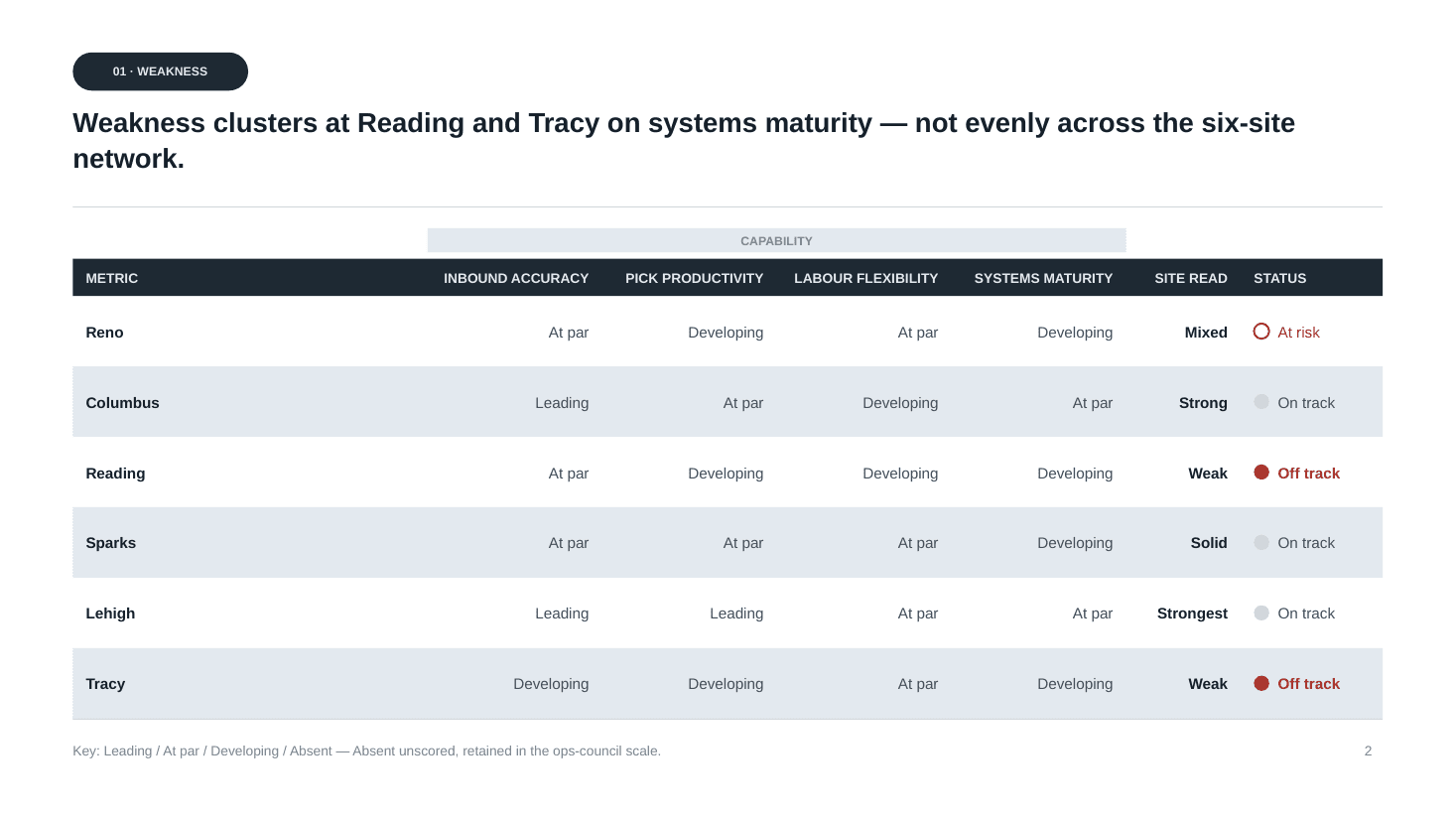
Slide 2 of 11 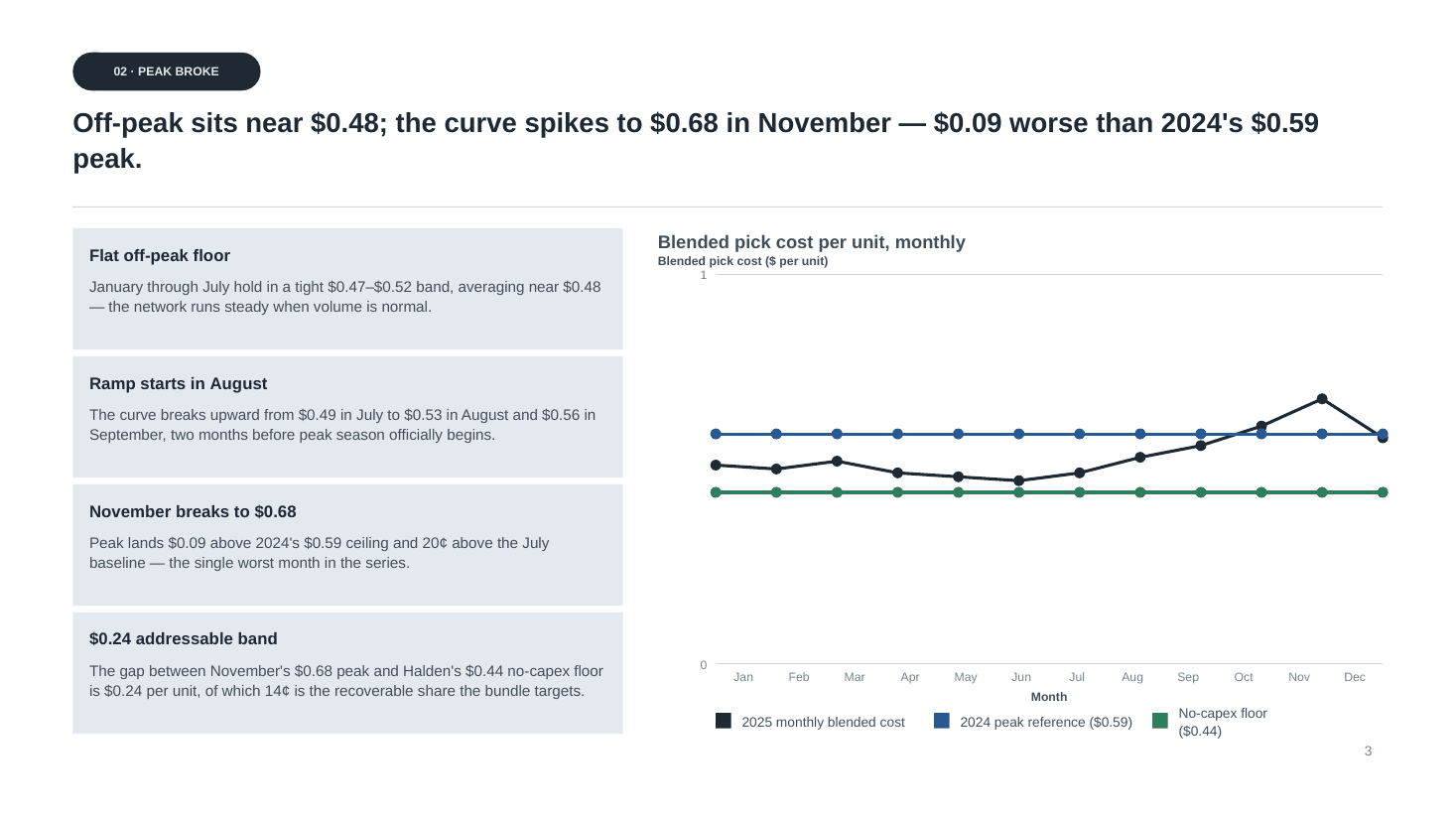
Slide 3 of 11 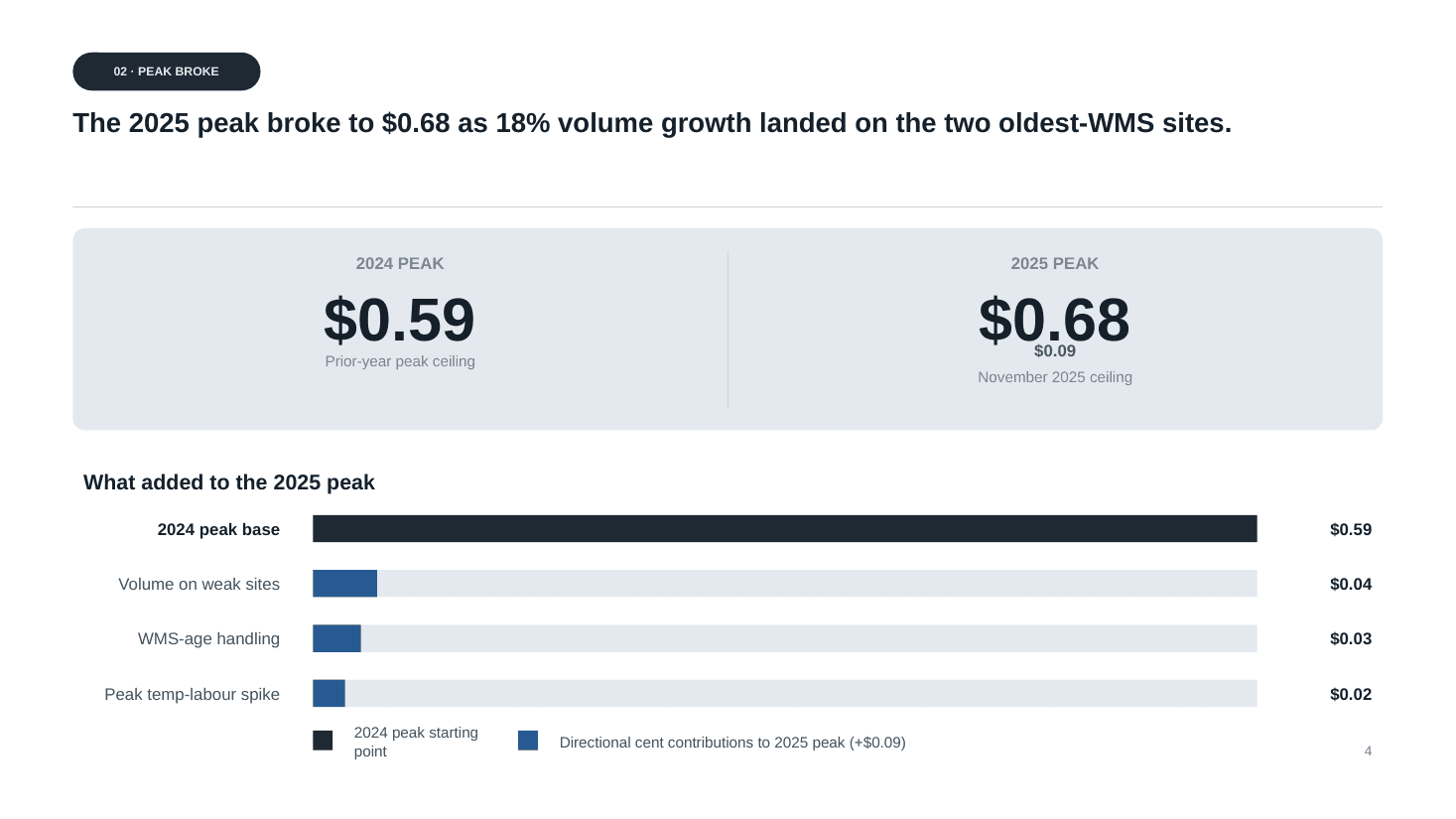
Slide 4 of 11 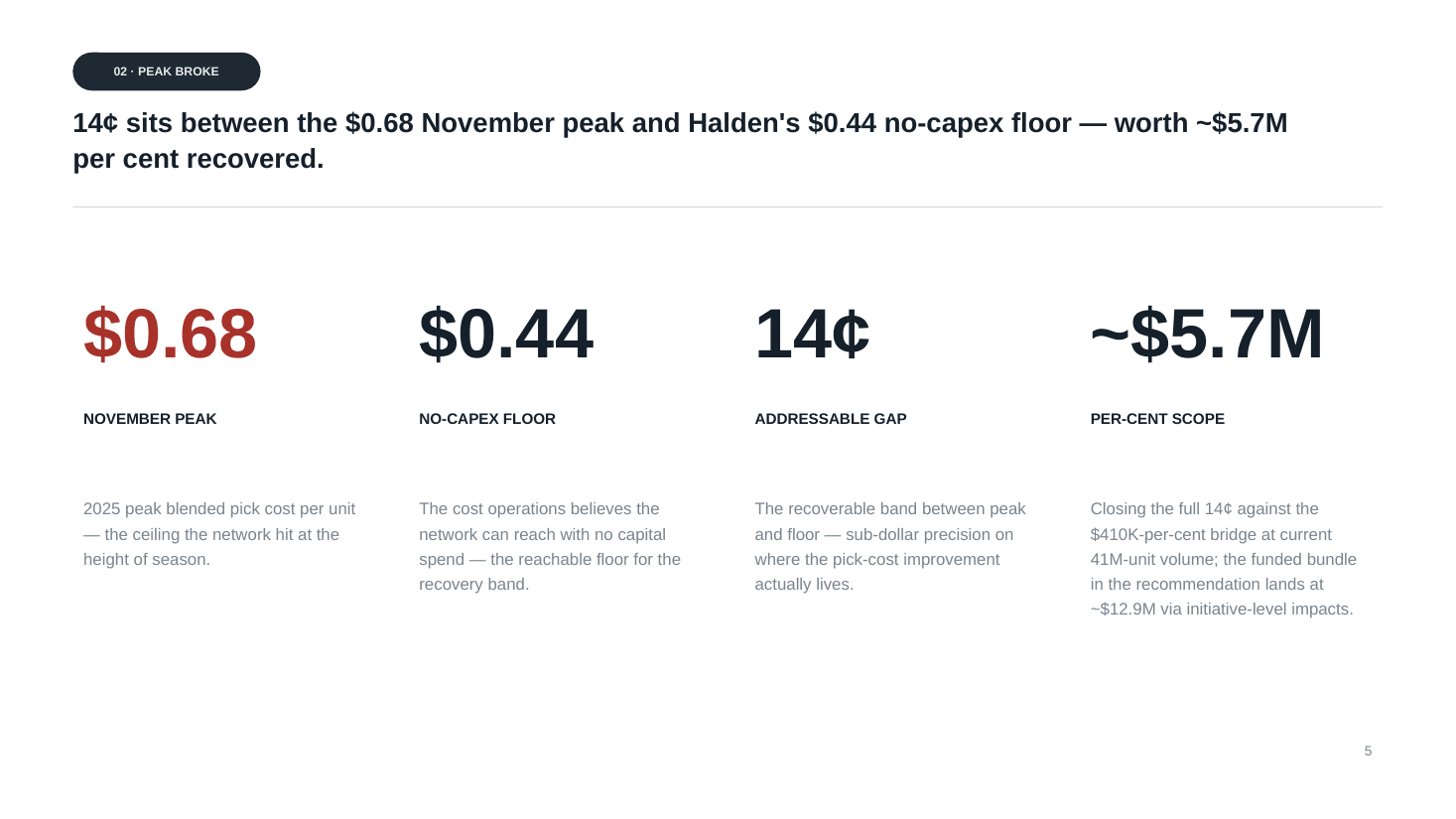
Slide 5 of 11 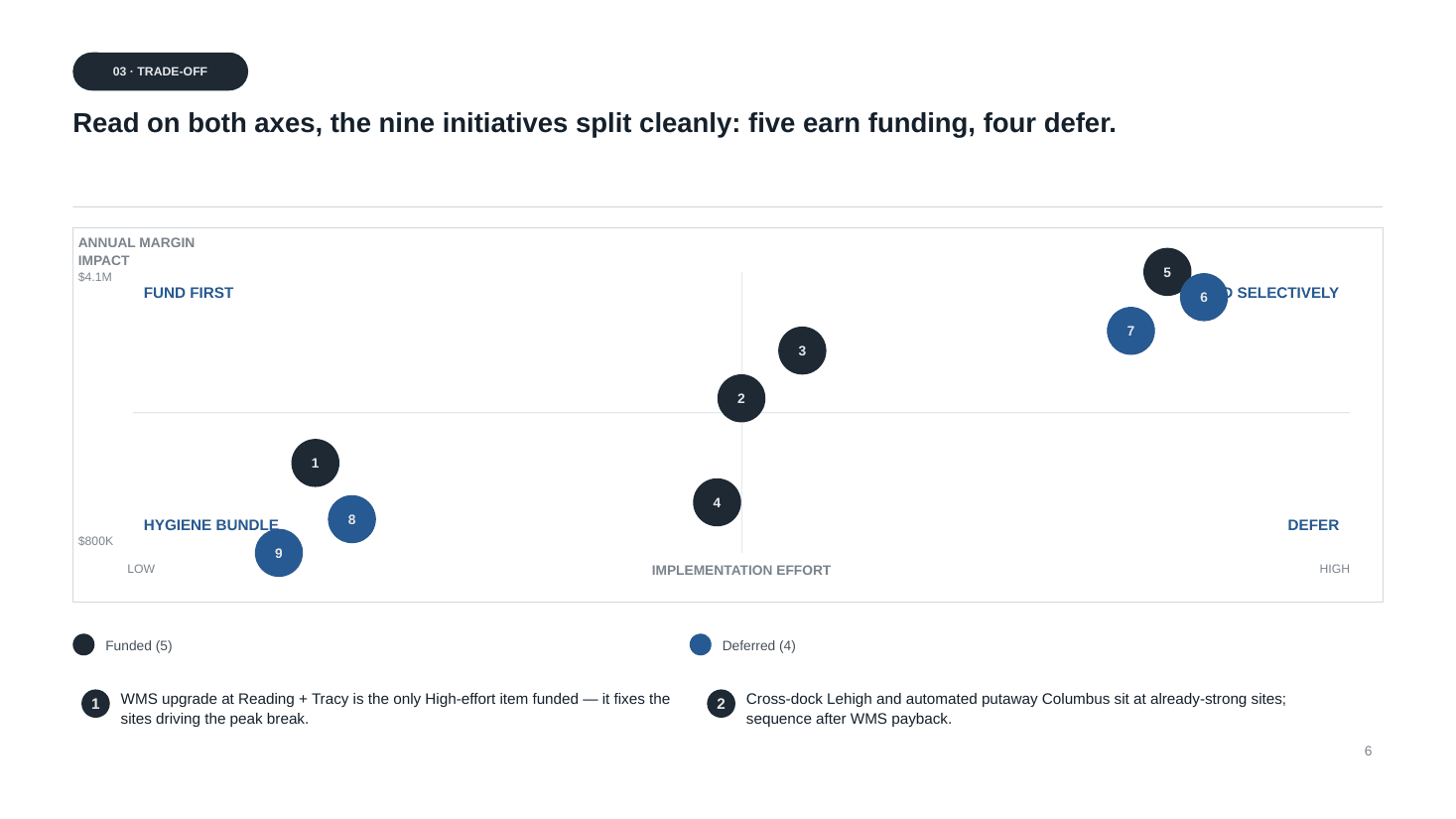
Slide 6 of 11 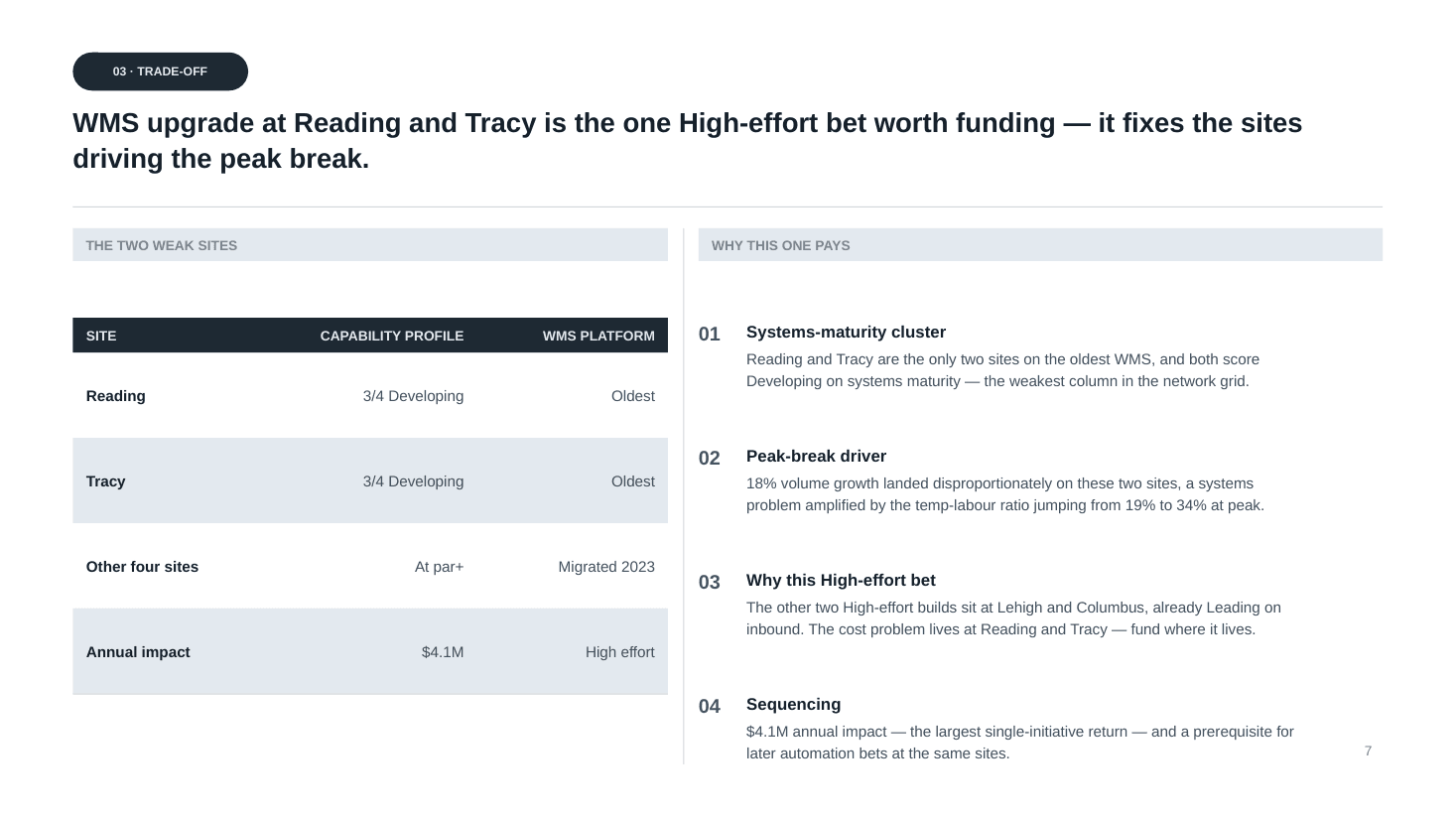
Slide 7 of 11 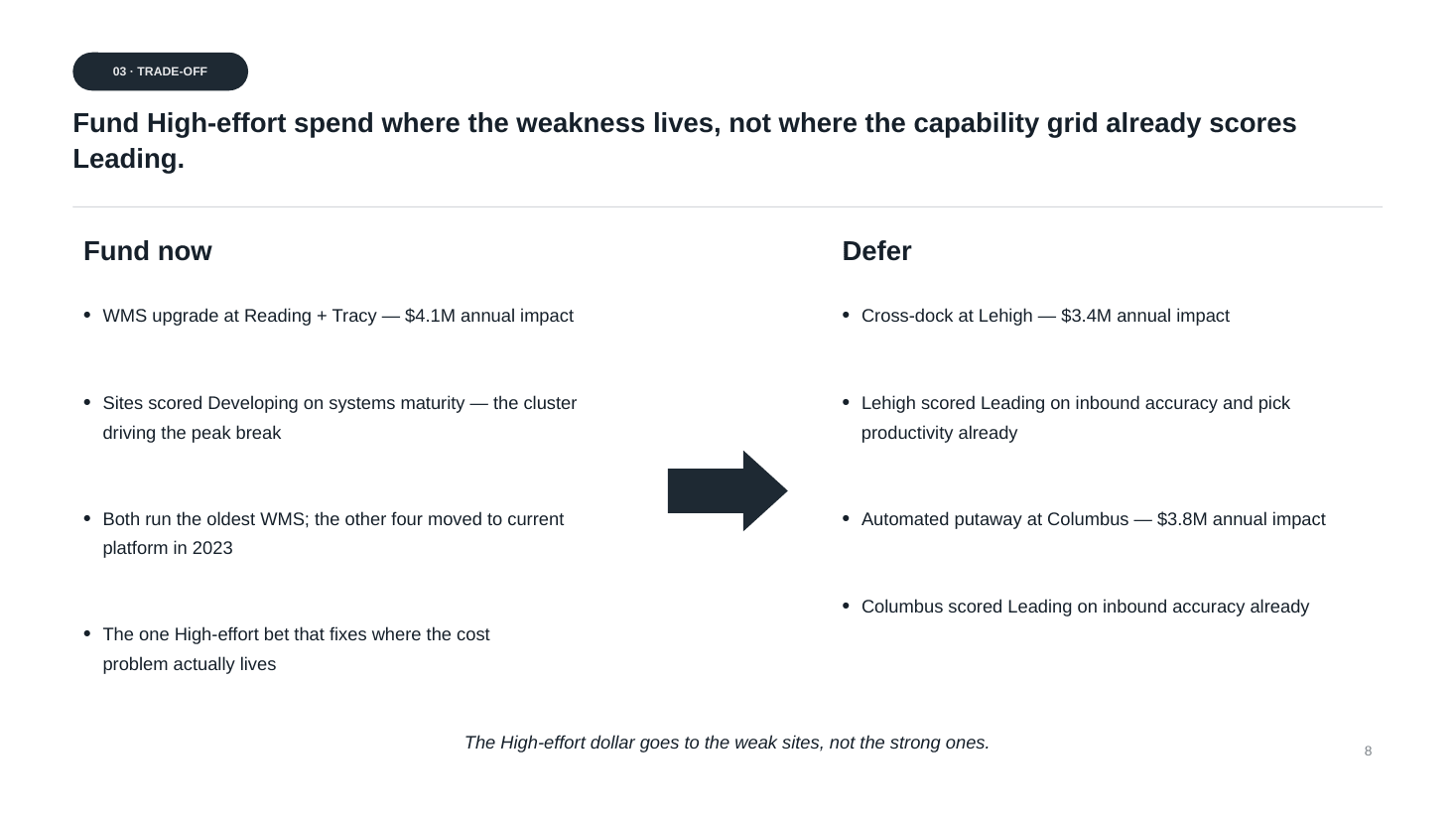
Slide 8 of 11 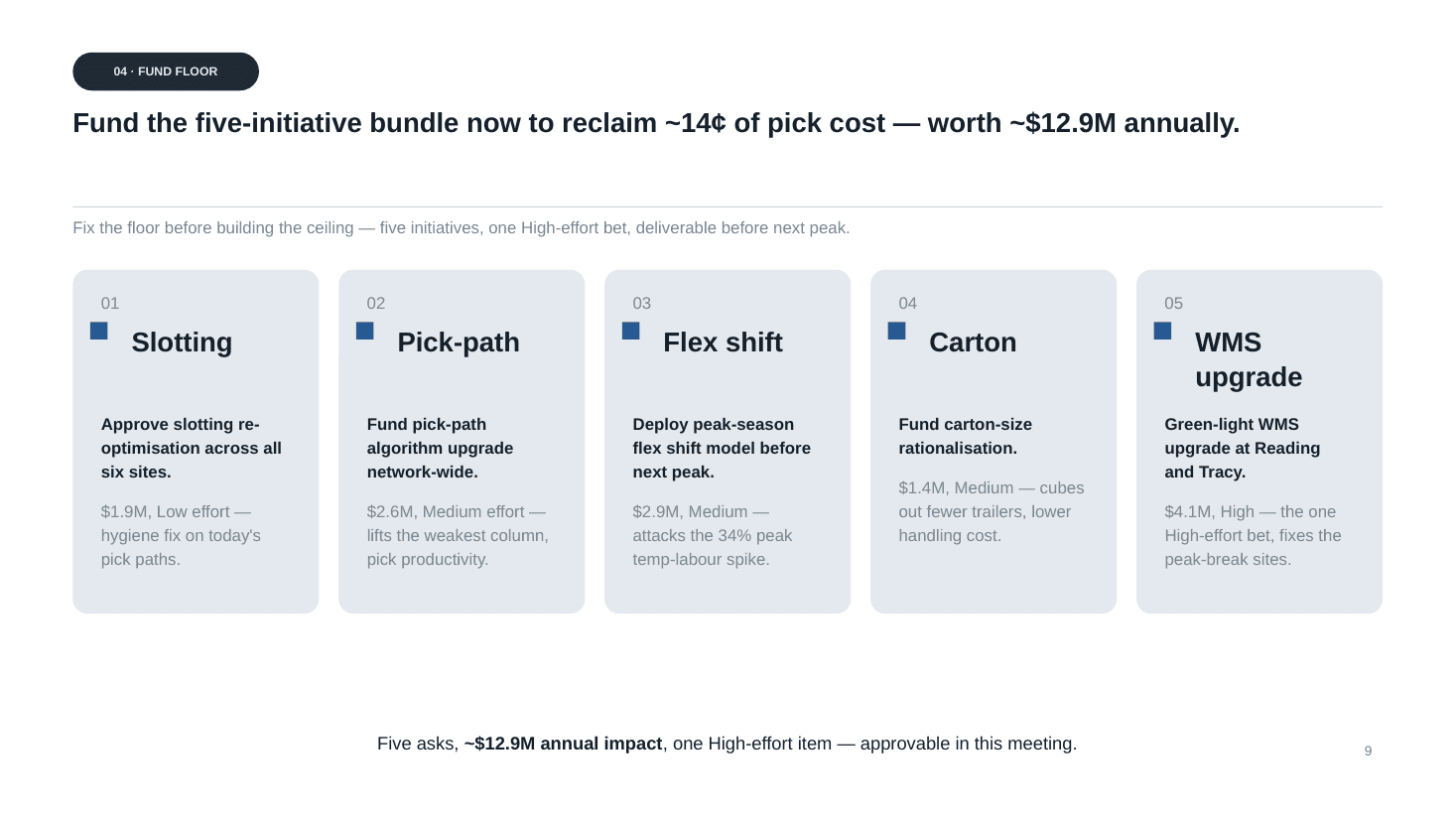
Slide 9 of 11 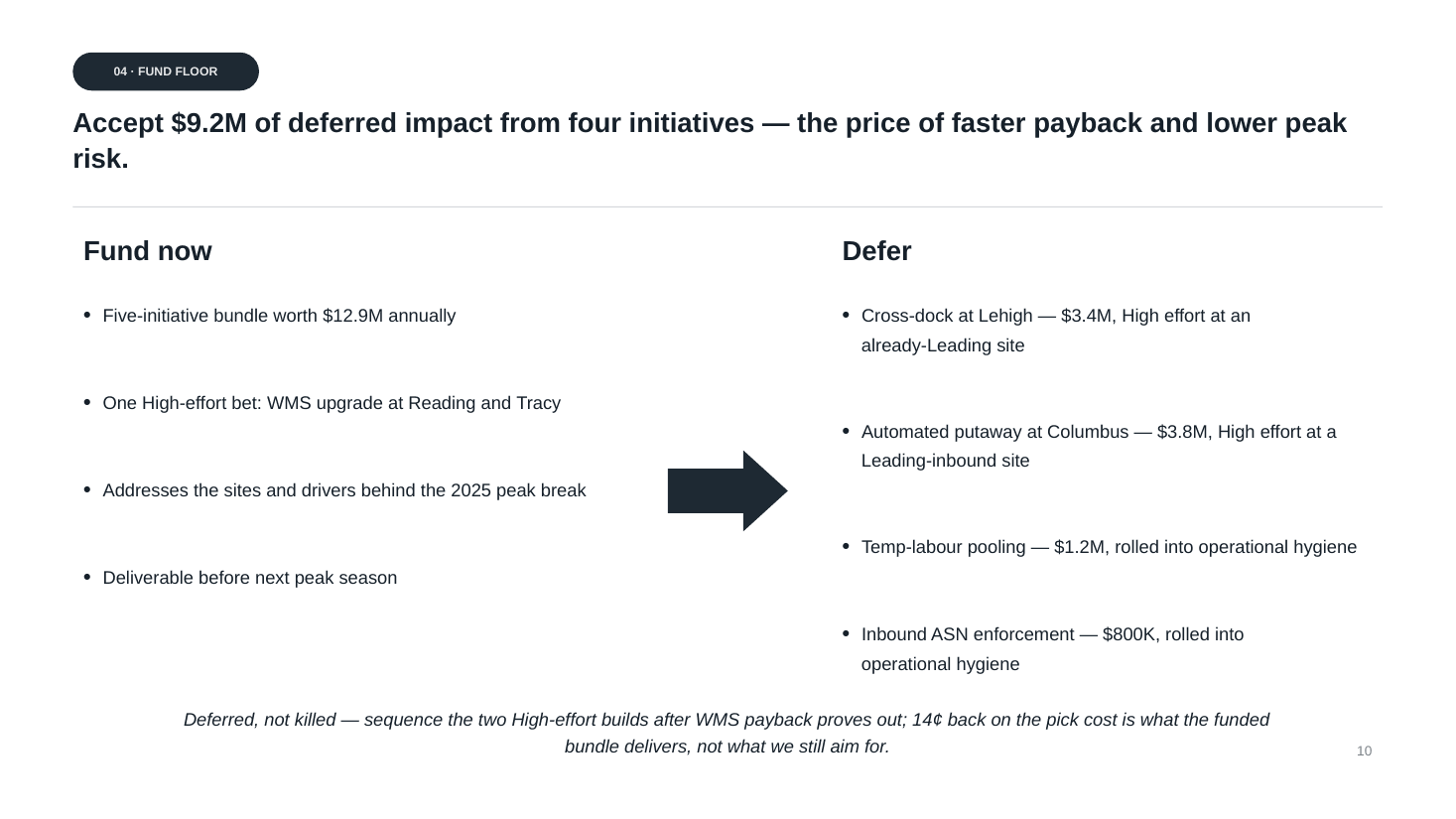
Slide 10 of 11 
Slide 11 of 11

The full write-up
Everything here is fictional. Halden Fulfilment is an invented company and every number
in these files was made up for this example. Nothing in it comes from a real client.
The case
Halden Fulfilment runs six third-party fulfilment centres for mid-market e-commerce brands.
Margin has compressed for five straight quarters while volume has grown. The COO wants to
know where the network is actually weak and which fixes to fund first. The candidate is
interviewing for an Operations Strategy role.
What the interviewer asked for
Ten to twelve slides: where the network is weak, read across sites and capabilities together
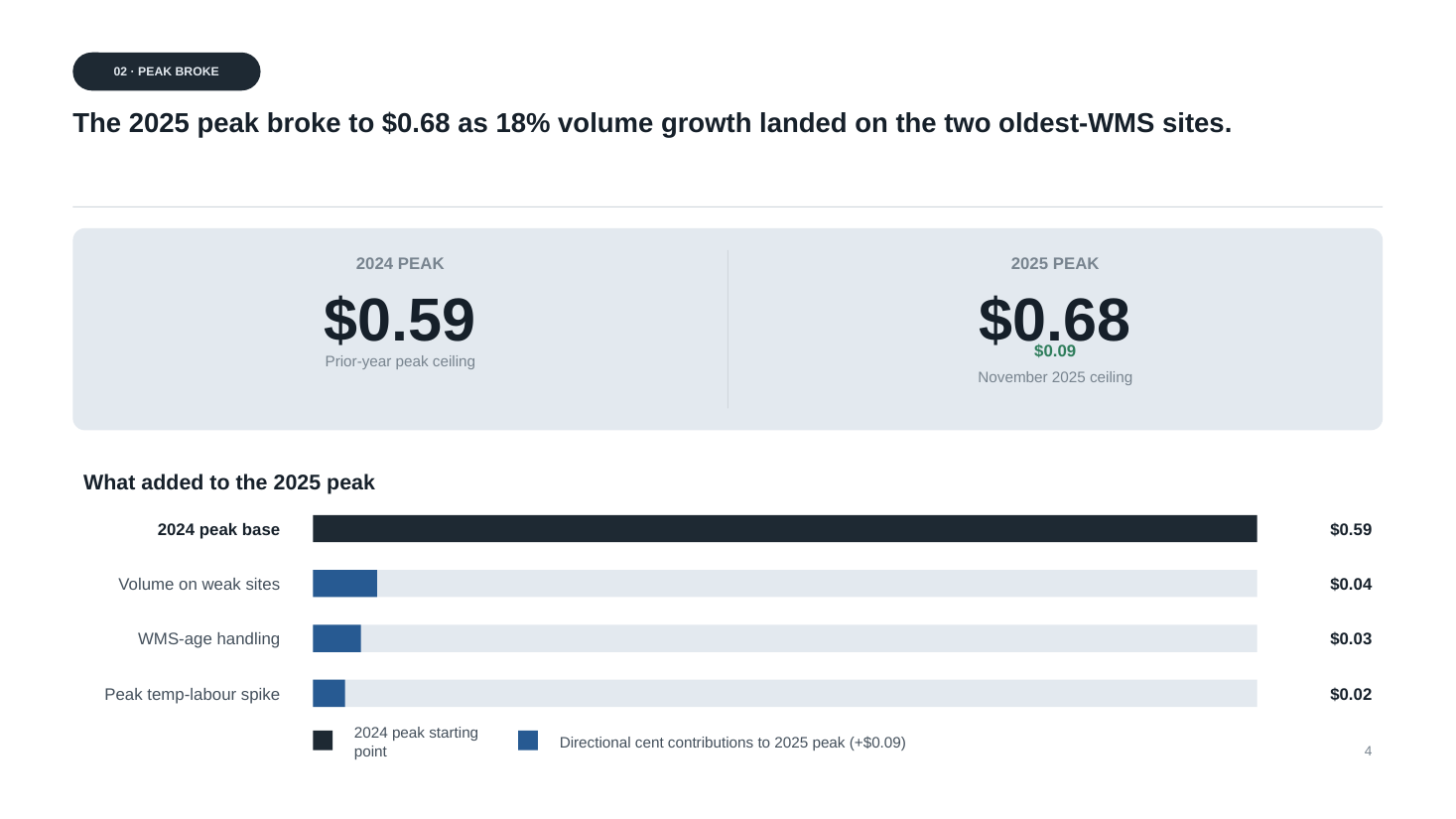
rather than one site at a time; what the cost curve says and why the 2025 peak broke worse
than 2024's; a funding order for nine improvement initiatives that makes the trade-off
between return and effort explicit; and a recommendation the COO can approve in one meeting.
What the deck argues
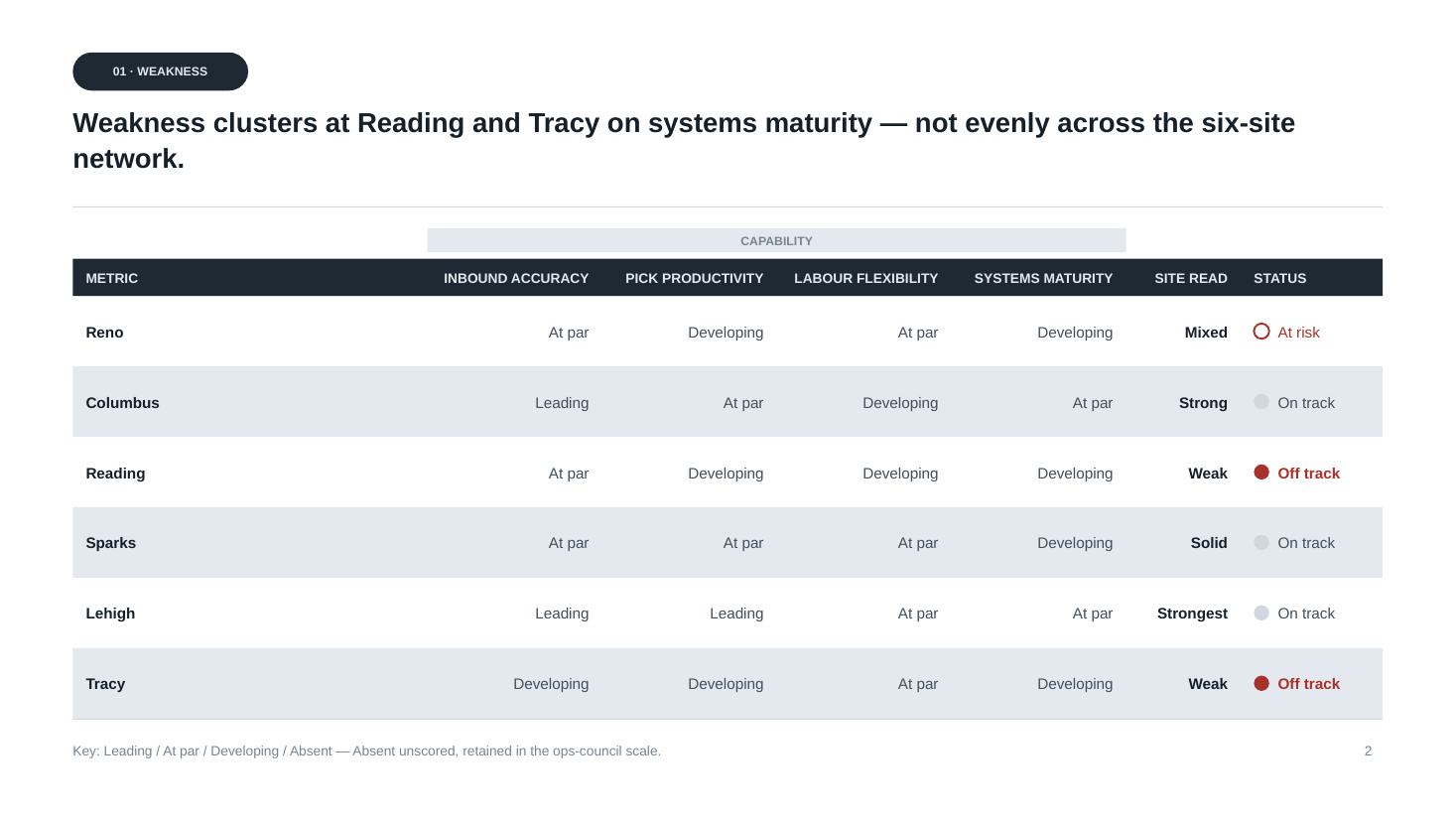
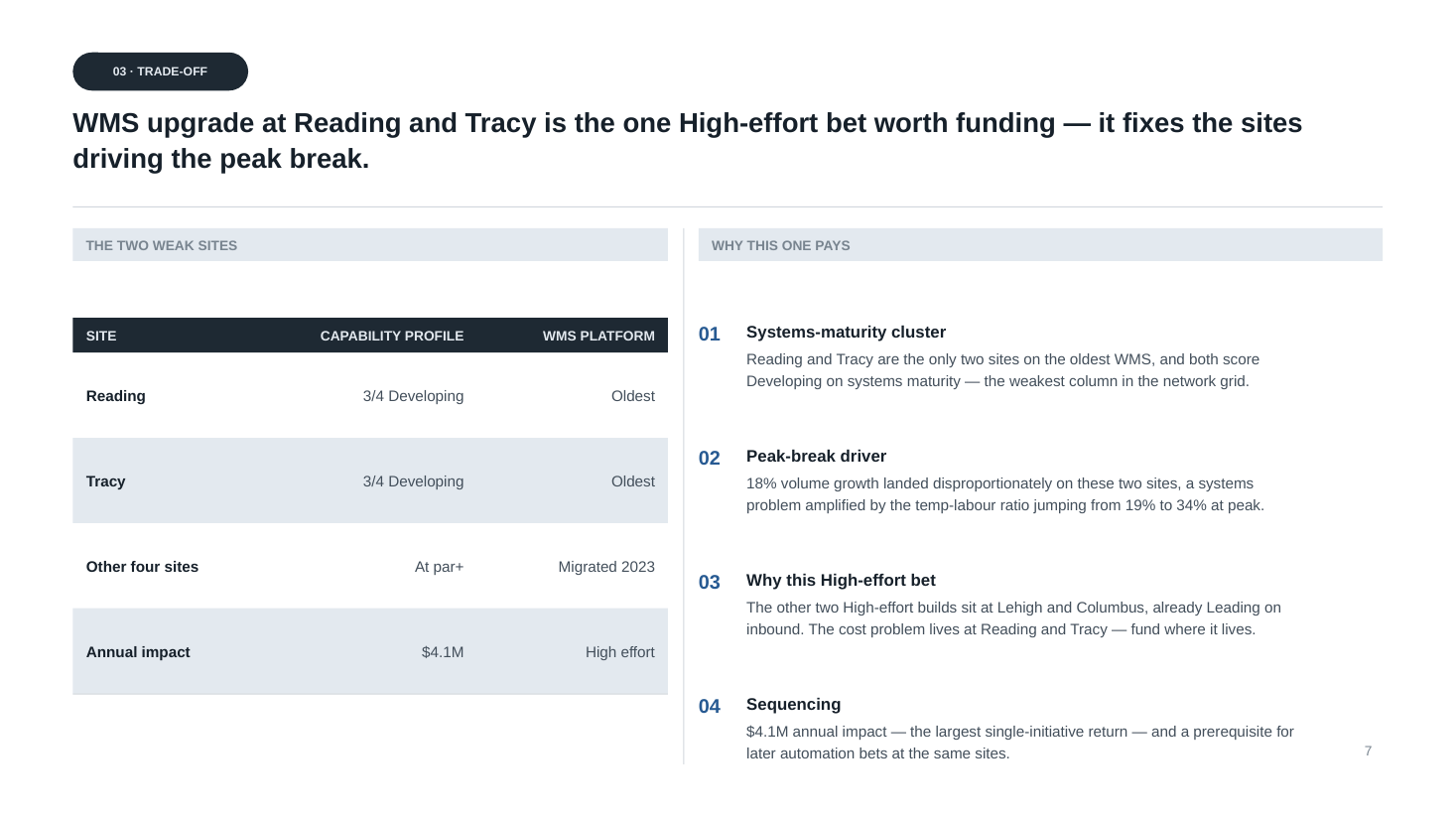
Weakness is not spread evenly across the six sites — it clusters at two of them, Reading and
Tracy, on one capability: systems maturity. Those two run the oldest warehouse management
system while the other four moved to the current platform in 2023. Cost per unit picked
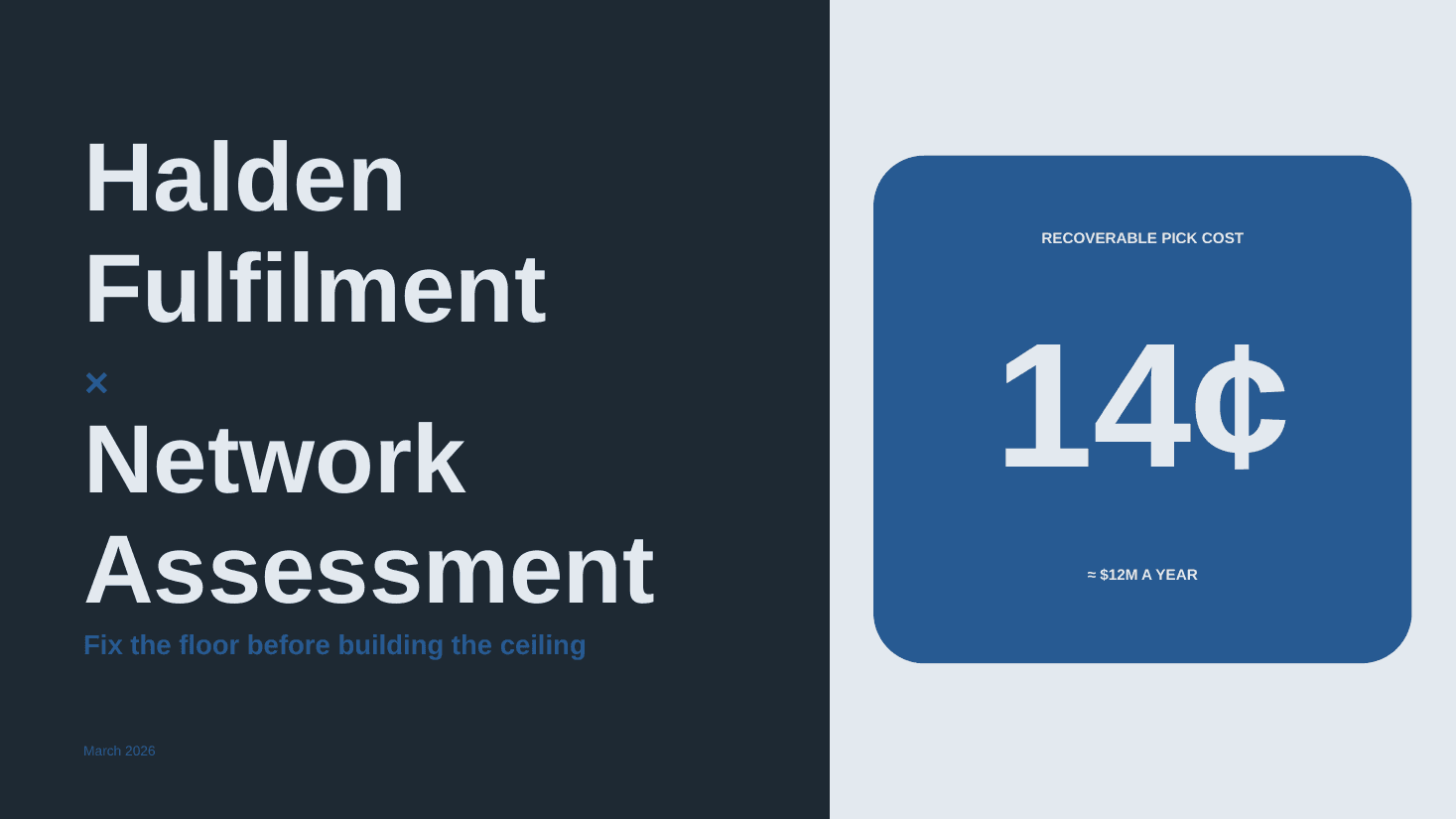
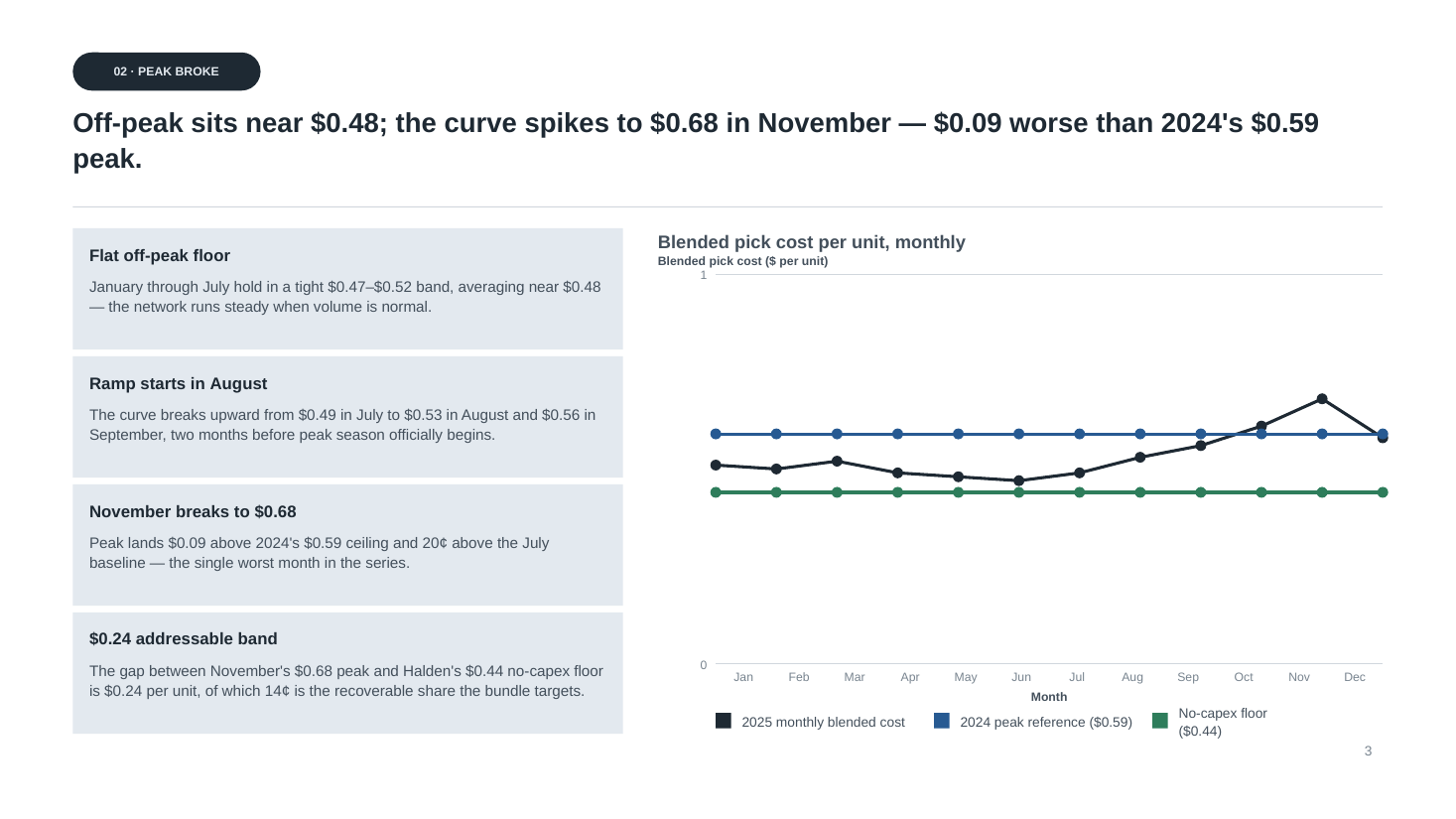
holds near $0.48 for seven months, then climbs from August and peaks at $0.68 in November —
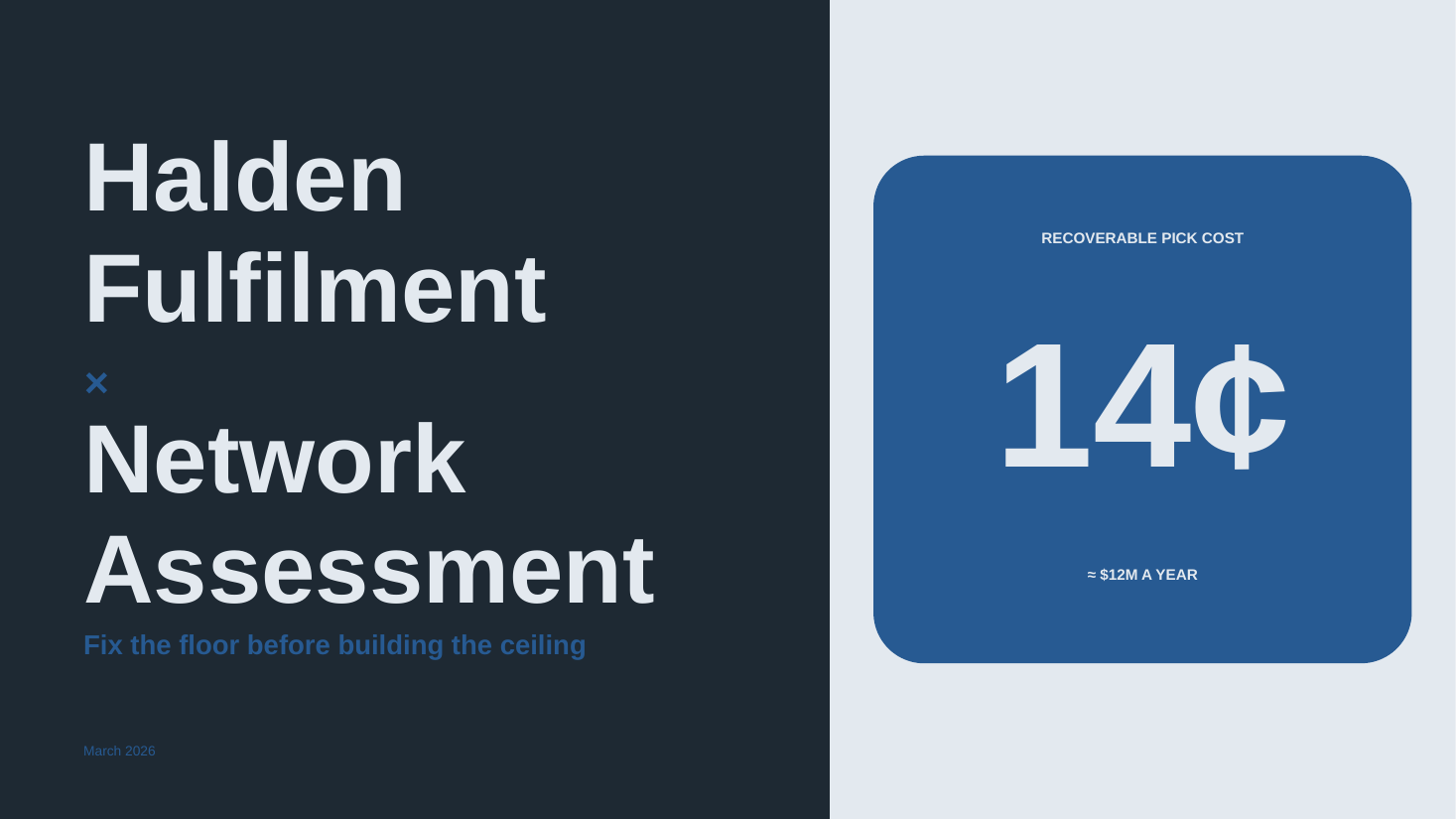
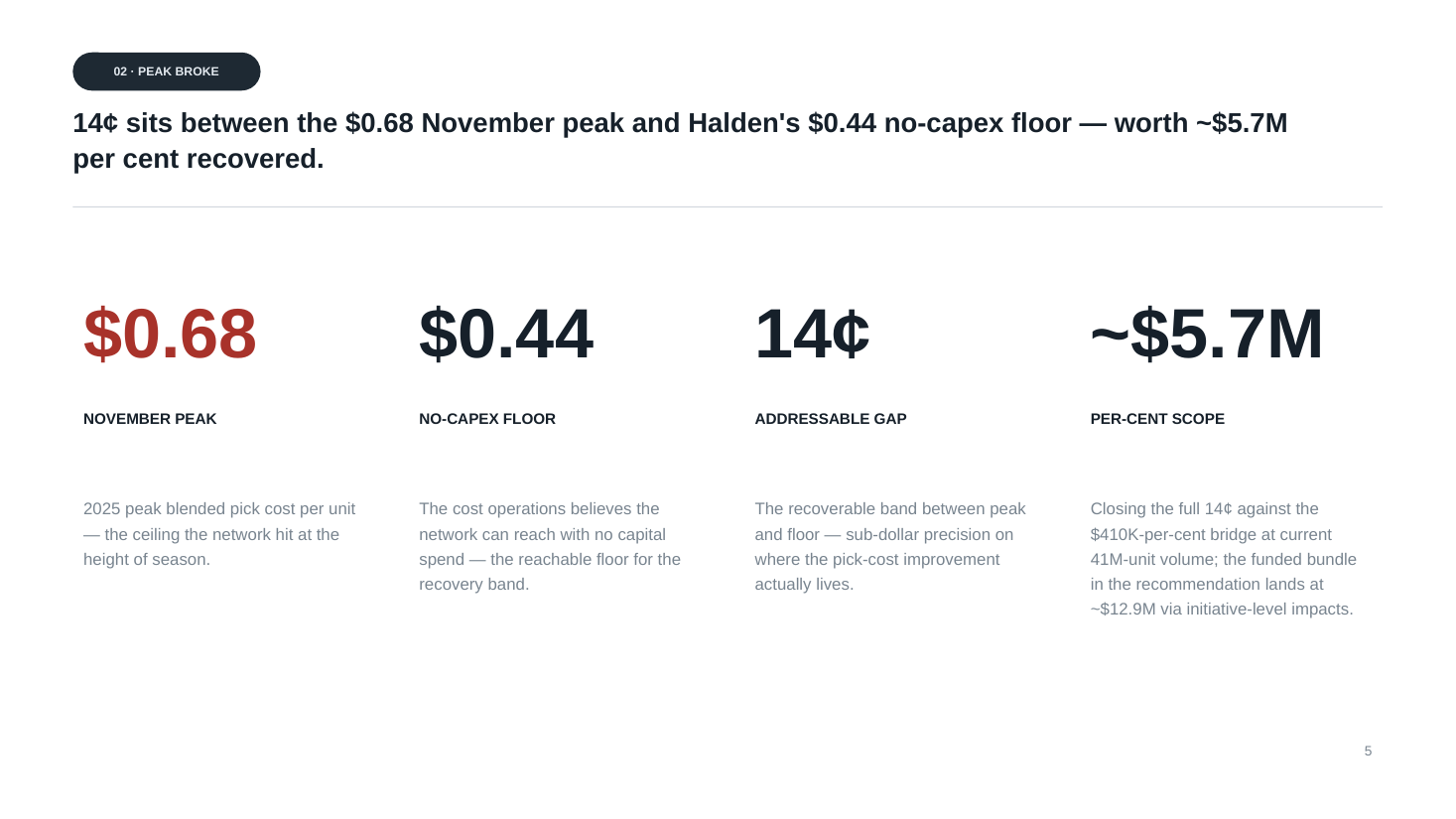
nine cents above the previous year. Against an internal floor of $0.44, roughly 14 cents a
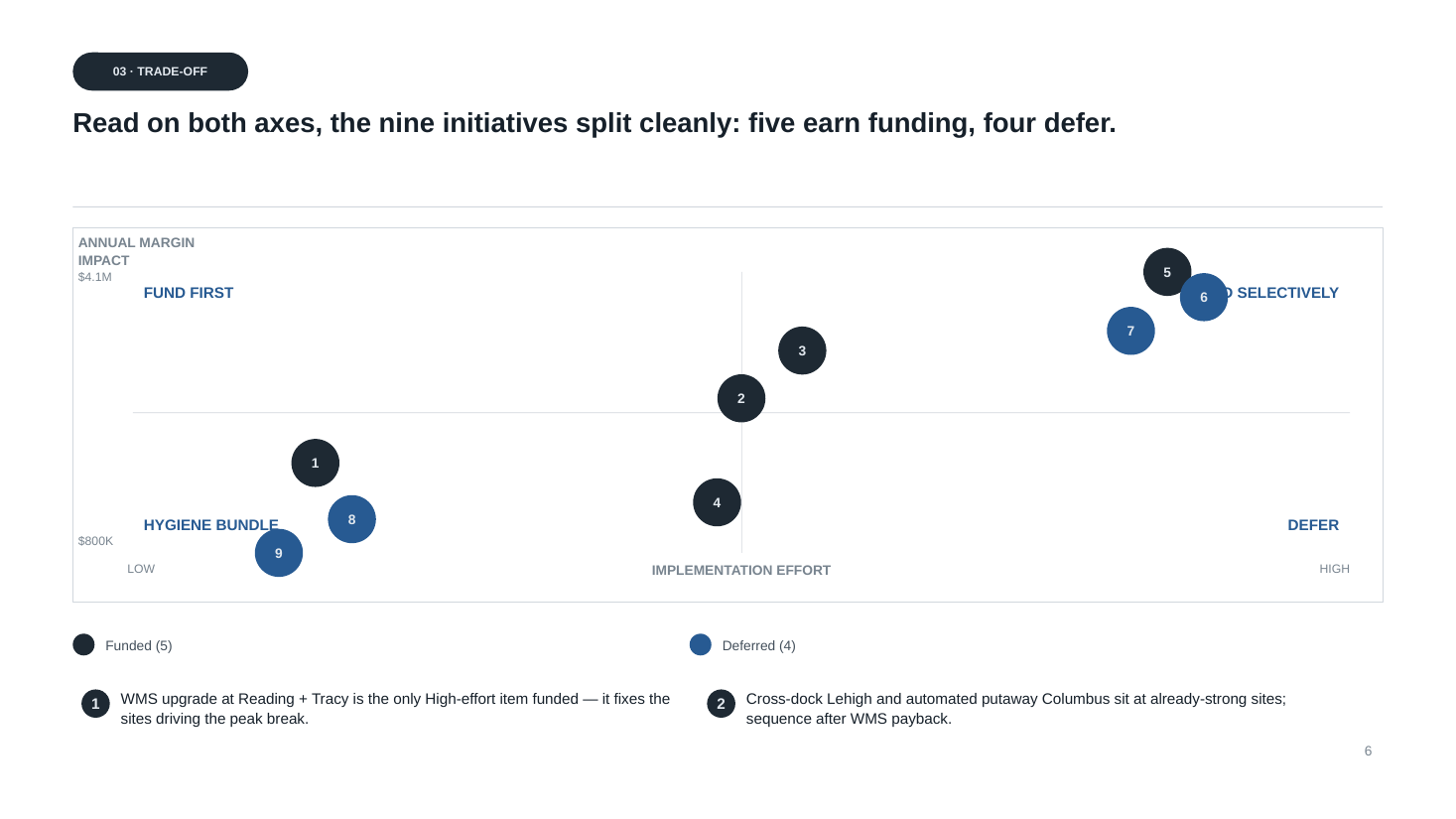
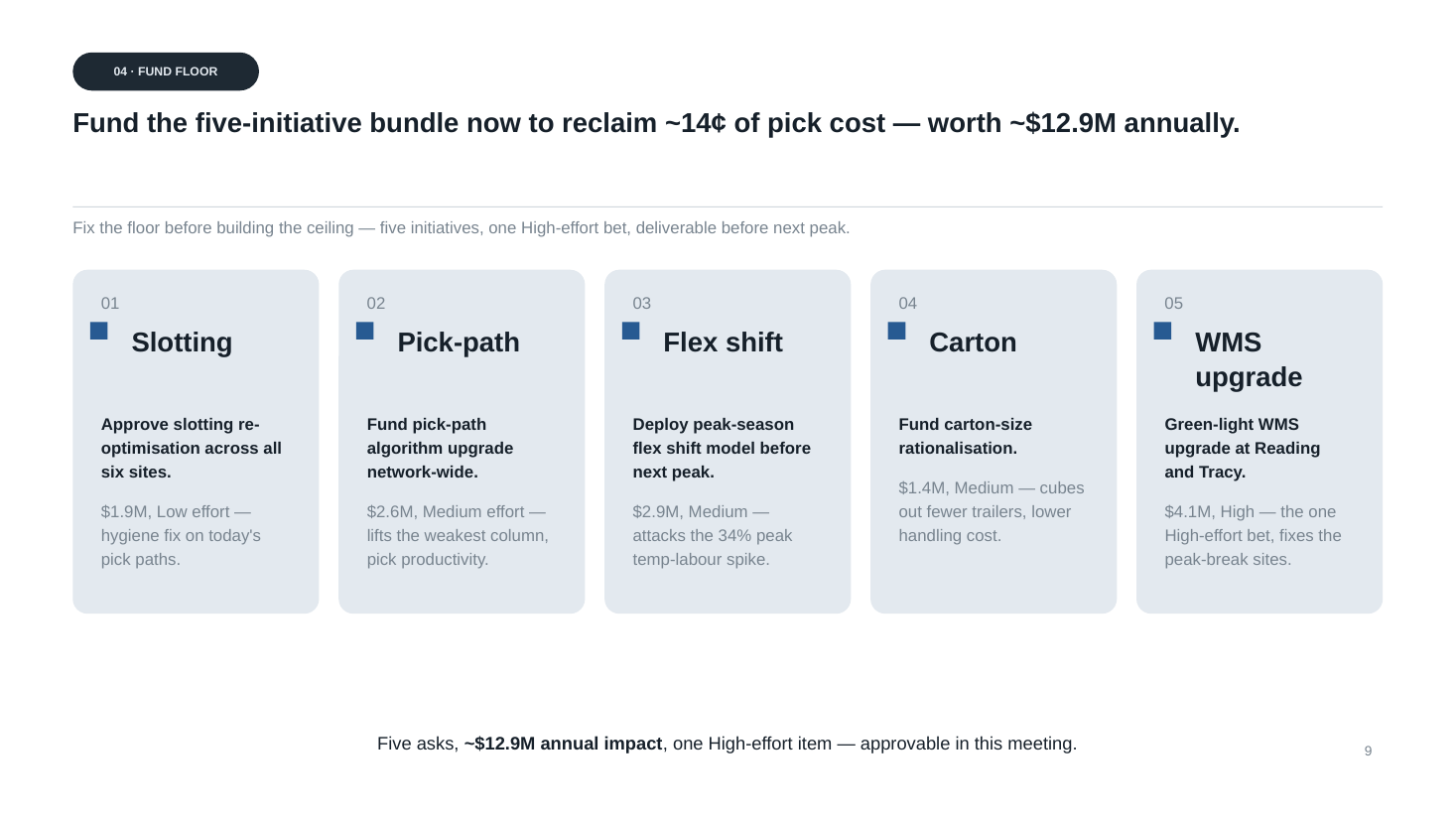
unit is recoverable. The recommendation funds five of the nine initiatives, worth about
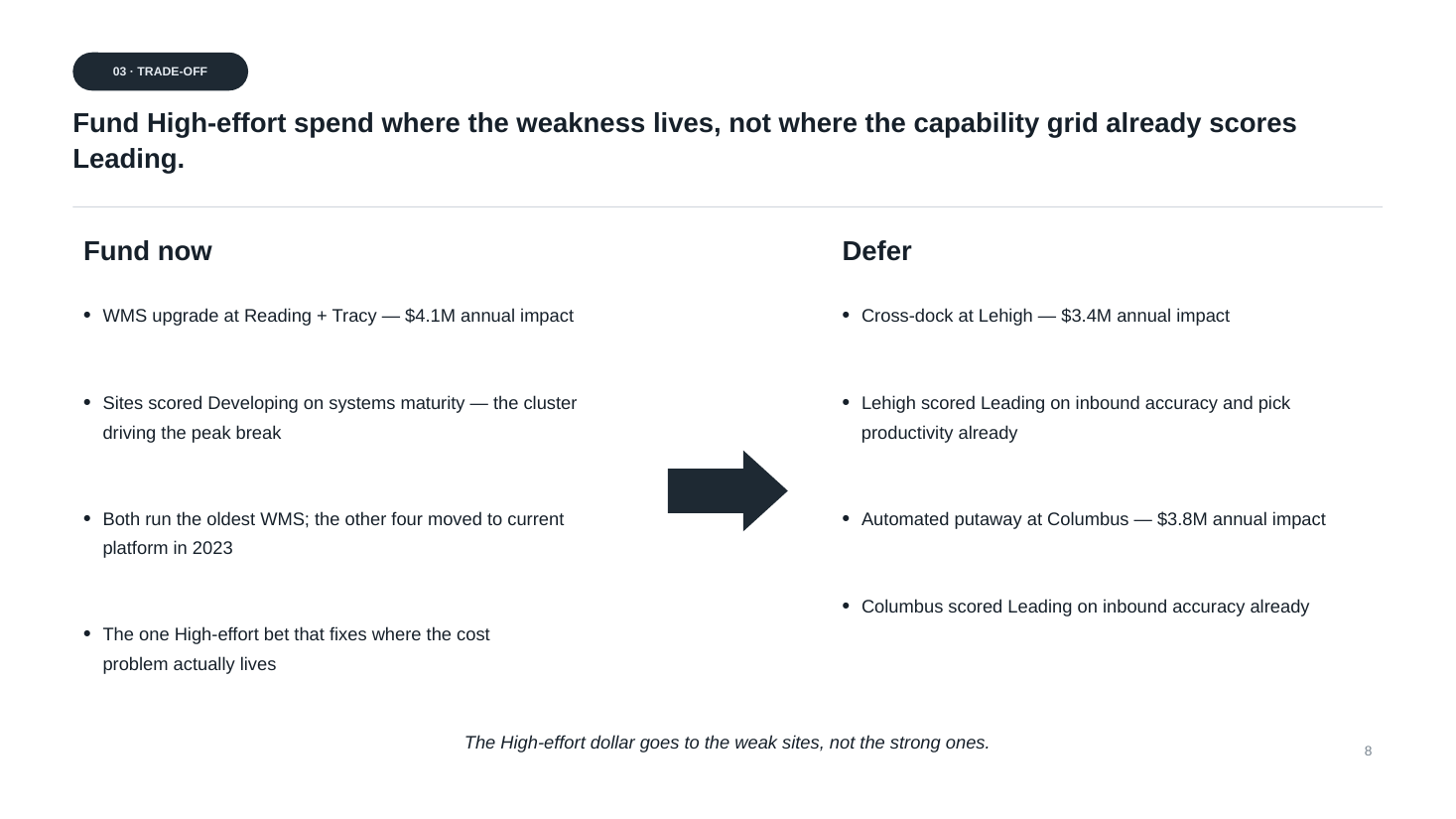
$12.9M a year, and takes exactly one high-effort bet: the systems upgrade at the two weak
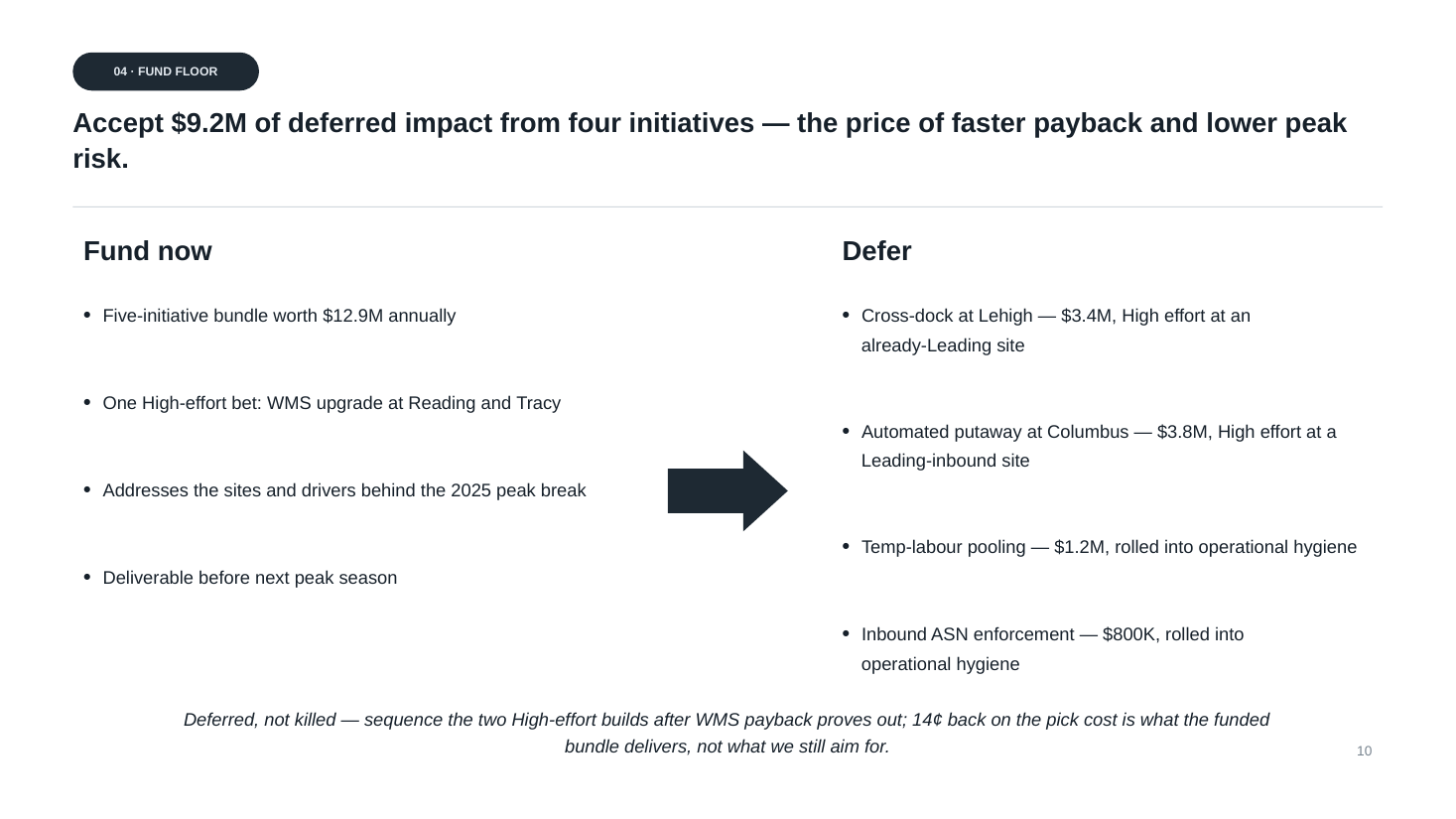
sites, because that is where the cost problem lives. The other four initiatives are deferred
rather than killed, and the deck says plainly what deferring them costs.
What comes with it
The Excel model carries the funding case. Three tabs: a summary comparing today against
the funded bundle and the full programme, a data tab with the cost-curve and impact
arithmetic, and an assumptions tab listing every input with its source — throughput, volume
growth, contribution margin, and the value of each cent off the pick cost. Live formulas
throughout.
The prep brief is the Word document for the meeting itself: the theory of the case, the
headline numbers, what you are asking the COO to approve, and prepared answers to the
questions a panel actually asks — starting with "why leave $9M of annual impact on the table?"
Your case will not look like this one — it is built from the prompt you paste in. You see a preview before you pay anything.